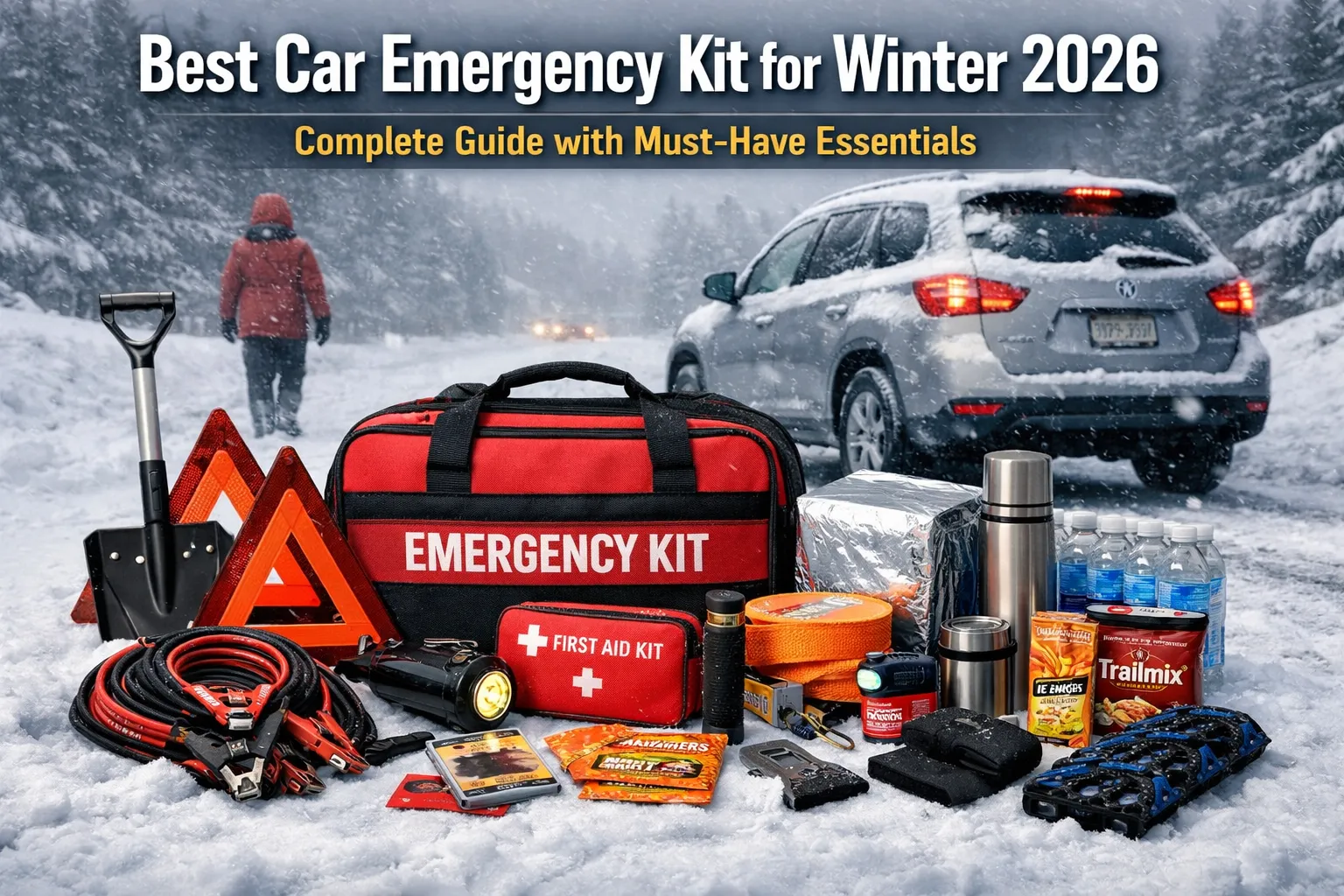
The catch: a change in conditions within minutes on winter roadways in the US, Canada, or UK can get ugly fast. You can get marooned for hours sometimes overnight by one surprise snowstorm, patch of black ice or freezing engine failure. Thousands of drivers are unaware of winter road risks every year, and wind up grieving for not having a winter car emergency kit.
There, the truth is simple: a good car emergency kit for winter can spell the difference between misery and catastrophe.
Whether you’re driving to work each day, taking a winter road trip, or putting a set of tires on your vehicle to deal with heavy snow areas such as Minnesota, Ontario, or Scotland it’s not optional Preparation is key.
In this comprehensive 2026 guide, you’ll discover exactly what you should pack, what to avoid when it comes to preparing for winter conditions, how much they cost and which winter emergency car kits are worth the cash. We’ll also explore DIY solutions, affordable setups, high end kits and region based advice.
The takeaway: by the end of this guide, you’ll have a winter car emergency kit checklist that helps keep you safe, warm and protected regardless of how harsh the winter becomes.
In This Complete Guide, You’ll Discover:
- What a car emergency kit for winter actually includes
- Why winter breakdowns are more dangerous than summer
- Complete winter emergency kit checklist
- Budget vs Premium kit comparison
- Cost breakdown (DIY vs Prebuilt)
- Region-based recommendations (US / Canada / UK)
- Winter survival essentials most drivers forget
- Storage & organization tips
- Mistakes to avoid
- Top-rated winter emergency kits (2026 picks)
- FAQs drivers search on Google & Bing
1.Why a Car Emergency Kit Is Critical in Winter
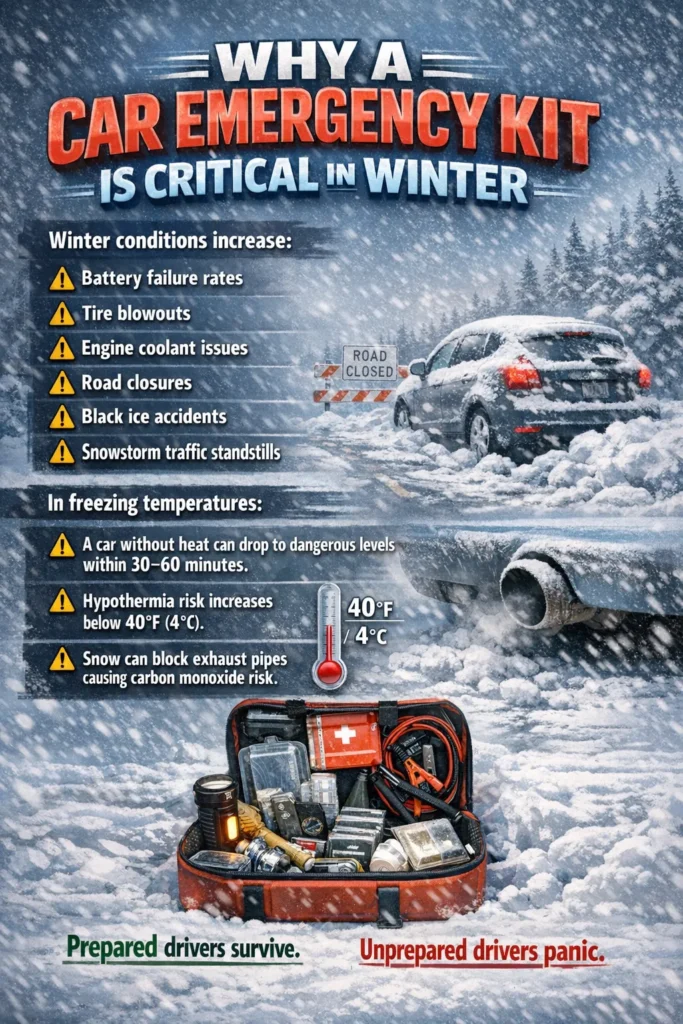
Winter conditions increase:
- Battery failure rates
- Tire blowouts
- Engine coolant issues
- Road closures
- Black ice accidents
- Snowstorm traffic standstills
In freezing temperatures:
- A car without heat can drop to dangerous levels within 30–60 minutes.
- Hypothermia risk increases below 40°F (4°C).
- Snow can block exhaust pipes causing carbon monoxide risk.
Prepared drivers survive. Unprepared drivers panic.
2.Complete Winter Car Emergency Kit Checklist (2026)
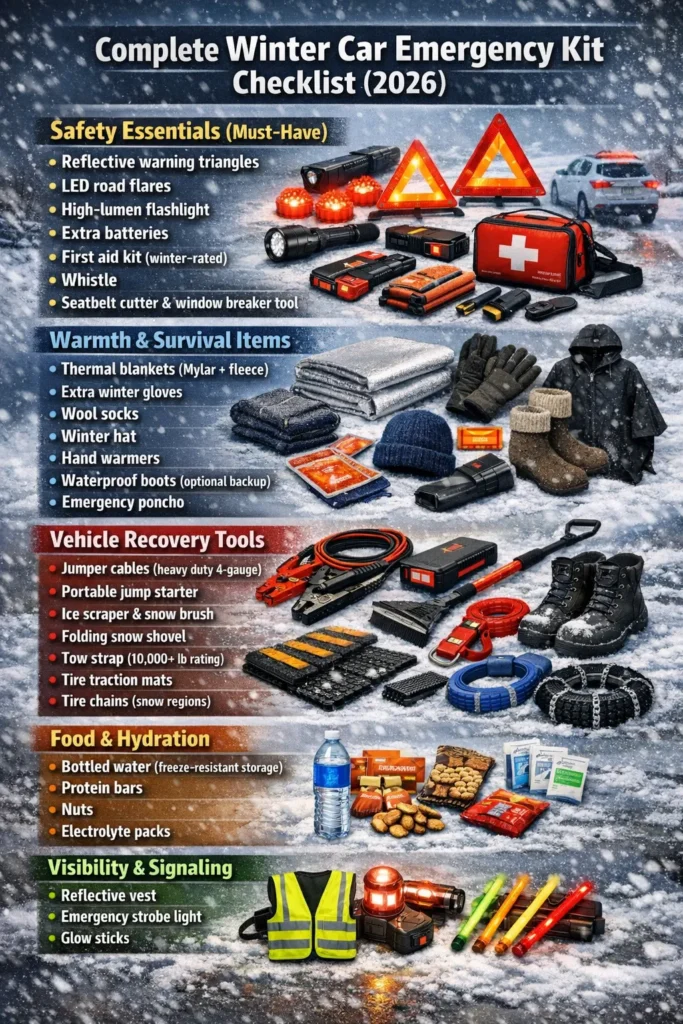
Safety Essentials (Must-Have)
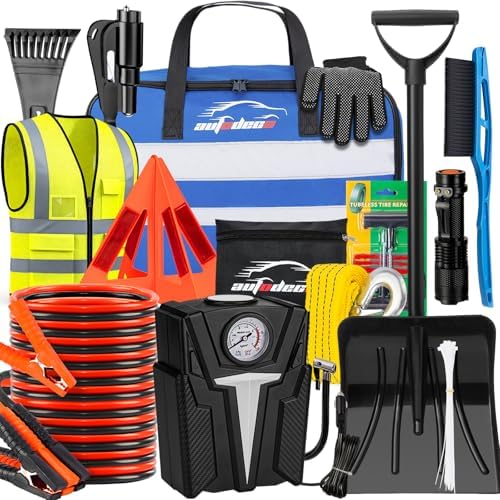
- Reflective warning triangles
- LED road flares
- High-lumen flashlight
- Extra batteries
- First aid kit (winter-rated)
- Whistle
- Seatbelt cutter & window breaker tool
Warmth & Survival Items
- Thermal blankets (Mylar + fleece)
- Extra winter gloves
- Wool socks
- Winter hat
- Hand warmers
- Waterproof boots (optional backup)
- Emergency poncho
Vehicle Recovery Tools
- Jumper cables (heavy duty 4-gauge)
- Portable jump starter
- Ice scraper + snow brush
- Folding snow shovel
- Tow strap (10,000+ lb rating)
- Tire traction mats
- Tire chains (snow regions)
Food & Hydration
- Bottled water (freeze-resistant storage)
- Protein bars
- Nuts
- Electrolyte packs
Visibility & Signaling
- Reflective vest
- Emergency strobe light
- Glow sticks
3.Items Most Drivers Forget
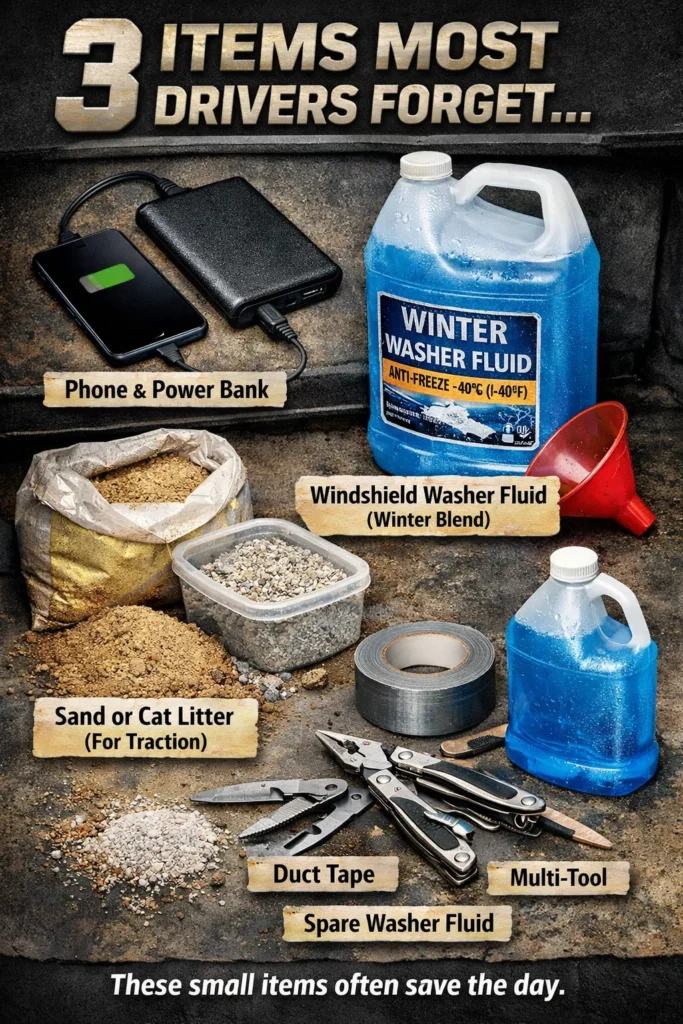
- Phone power bank
- Windshield washer fluid (winter blend)
- Sand or cat litter (for traction)
- Duct tape
- Multi-tool
- Spare windshield fluid
These small items often save the day.
4.DIY vs Prebuilt Winter Emergency Kit
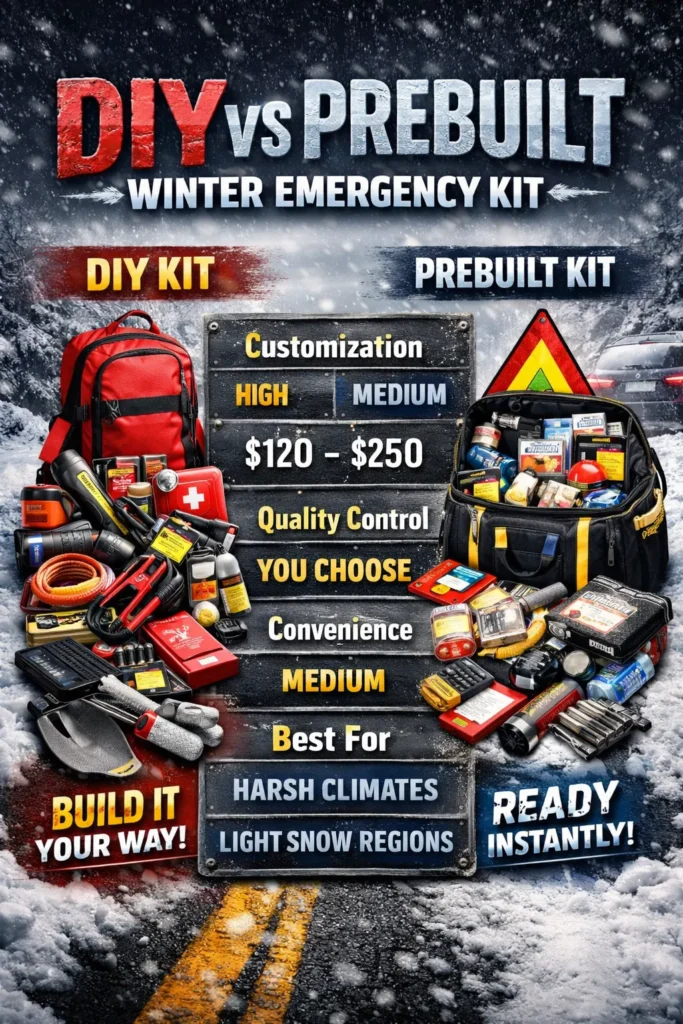
| Feature | DIY Kit | Prebuilt Kit |
|---|---|---|
| Customization | High | Medium |
| Cost | $120–$250 | $80–$300 |
| Quality Control | You choose | Brand dependent |
| Convenience | Medium | High |
| Best For | Harsh climates | Light snow regions |
5.Cost Breakdown (2026 Updated)
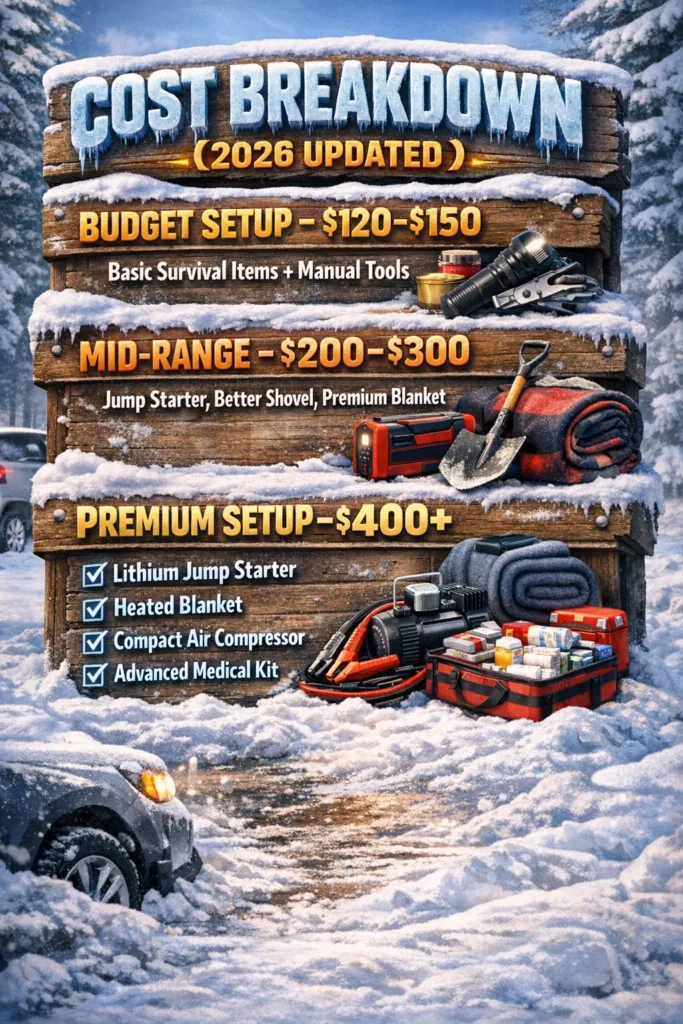
Budget Setup – $120–$150
Basic survival items + manual tools
Mid-Range – $200–$300
Includes jump starter, better shovel, premium blanket
Premium Setup – $400+
Includes:
- Lithium jump starter
- Heated blanket
- Compact air compressor
- Advanced medical kit
6.Region-Specific Recommendations
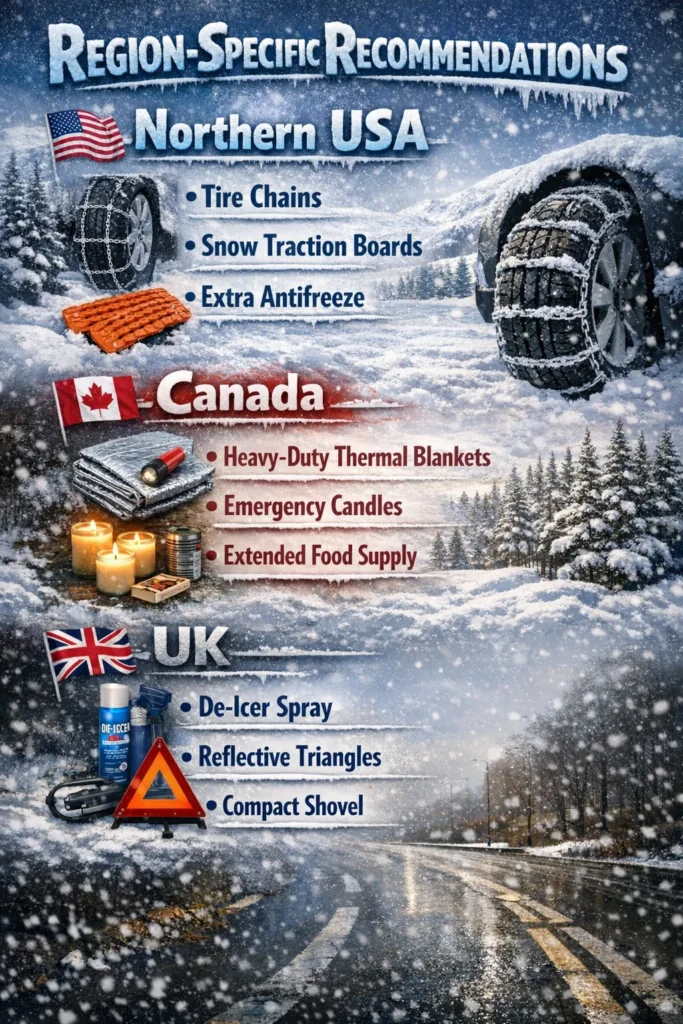
🇺🇸 Northern USA
Add:
- Tire chains
- Snow traction boards
- Extra antifreeze
🇨🇦 Canada
Must include:
- Heavy-duty thermal blankets
- Emergency candles
- Extended food supply
🇬🇧 UK
Focus on:
- De-icer spray
- Reflective triangles
- Compact shovel
7.Storage & Organization Tips
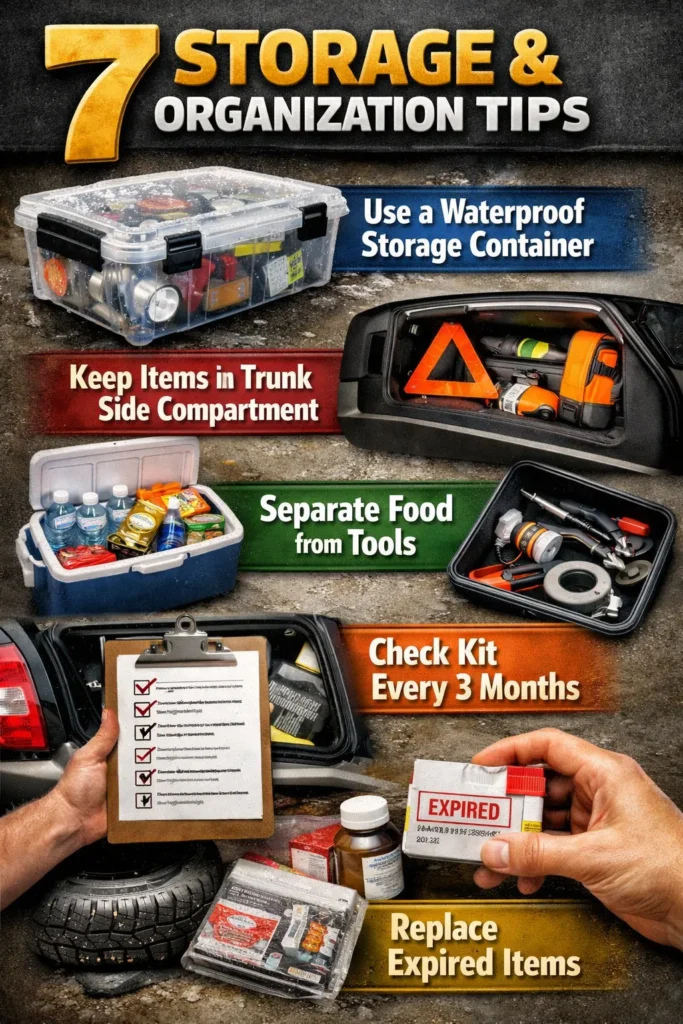
- Use waterproof storage container
- Keep items in trunk side compartment
- Separate food from tools
- Check kit every 3 months
- Replace expired items


8.Top 3 Recommended Winter Emergency Kits (2026)
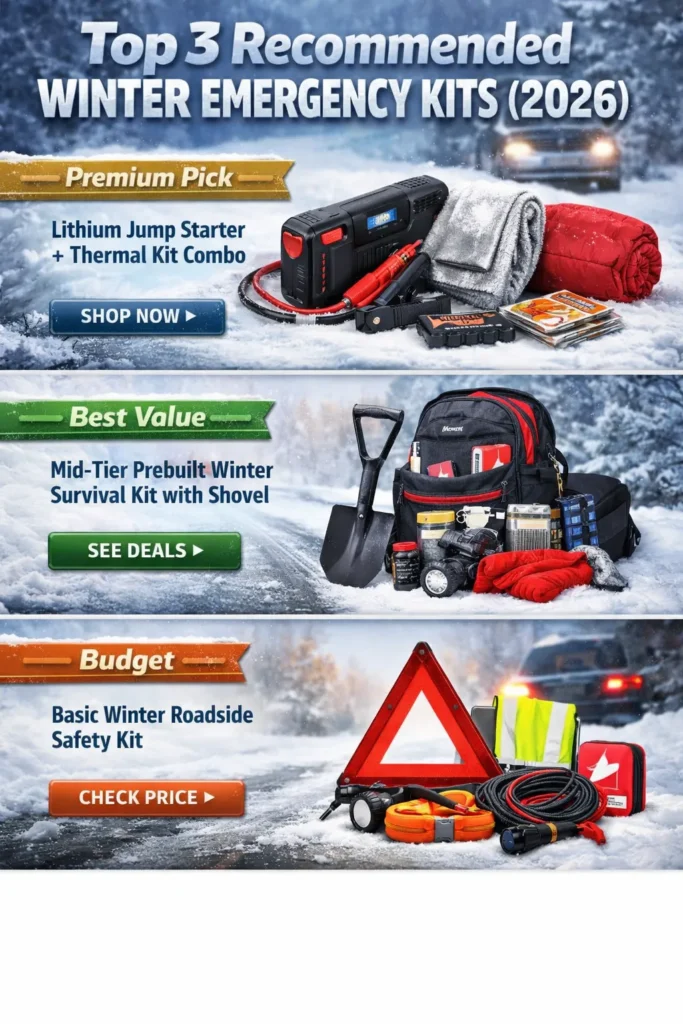
Premium Pick
Lithium jump starter + thermal kit combo
Best Value
Mid-tier prebuilt winter survival kit with shovel
Budget
Basic winter roadside safety kit
(You can add affiliate links here)
9.Common Mistakes to Avoid
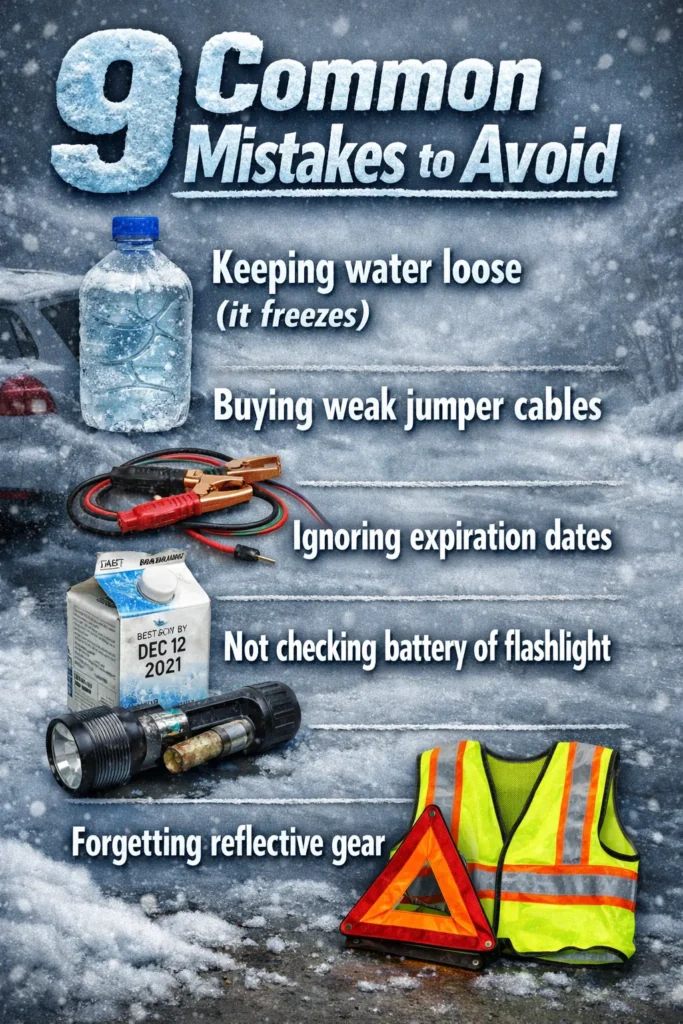
Keeping water loose (it freezes)
Buying weak jumper cables
Ignoring expiration dates
Not checking battery of flashlight
Forgetting reflective gear
FAQs
1.What are the “Big Three” essentials for winter?
Safety experts list warmth (blankets/spare clothes), visibility (flares/lights), traction (sand/salt/shovel).
2.Are Mylar space blankets actually effective?
Yes, very good at reflecting bodyheat and take virtually no room But especially on long waits it is common for most drivers to put a heavy wool or fleece blanket too, so you can add extra insulation and comfort.
3.How much sand or kitty litter should I carry?
Bag weighs between 10–20 lbs and is generally adequate to put some pressure on the incline domain under turning wheels. Warning: Use non-clumping kitty litter, they can turn into a pretty wet and slippery puddle.
4.Should I keep a candle in my winter kit?
A deep tin can with a “survival candle” inside is a great way to produce some heat and light in an automobile. But you need to leave a window cracked to ventilate it otherwise you’ll die- from carbon monoxide asphyxiation, or lack of oxygen.
5.How do I keep my phone charged if the car battery dies?
However, if the engine does not start, a portable power bank (kept in your home until you leave) is definitely better than a car charger. Place it in a warm body pocket as cold temperatures quickly discharge batteries.
6.What kind of shovel is best?
A collapsible or folding metal shovel is the gold standard. Plastic shovels are lighter but can snap when trying to break through frozen ice or packed slush.
7.Do I really need to carry extra food and water?
Yes. Pack high-calorie, non-perishable snacks (like protein bars or chocolate). For water, keep a bottle only 3/4 full so it doesn’t burst when it freezes.
8.Are battery-powered jump starters better than cables?
It will be useful during winter, a lithium-ion jump starter pack is good! This means you can jump-start your own car without requiring another one, and is essential on more remote or snowy roads.
9.What should I do if I get stuck in a blizzard?
The Number One rule was stay with your vehicle. It is your primary shelter. If you are going to run the engine for 10 minutes each hour so that the Jeep will remain warm, be sure the exhaust pipe is free of snow.
10.How can I make my car more visible if it’s snowing hard?
That all depends on your local laws and the terrain in which you are. The carrying of tire chains, or “snow socks”, is legally mandated in many mountain areas during winter months.
11.Do I need to carry tire chains?
This depends on your local laws and terrain. In many mountainous regions, carrying tire chains or “snow socks” is a legal requirement during winter months.
12.Should I include a change of clothes?
Yes. Extra socks, gloves and a warm hat in special. Once you are done digging your car out, it is essential that you change out of wet clothing as soon as possible to avoid hypothermia.
Final Verdict
A winter car emergency kit is not a trendy accessory — it’s essential for survival. Blizzards, extreme cold and surprise breakdowns don’t come with a warning. If you live in the northern US, Canada or spend part of every winter with occasional snow covering in the UK, a great Winter car emergency kit can work for you to increase your safety and peace of mind.
In 2026, notably smart drivers aren’t merely anticipating weather — they’re planning for it. A sound winter emergency kit will help you to avoid cold exposure, road hazards and long delays. It costs little in preparation for the possible dangers of being stranded without provisions.
If you drive in the winter months, Particularly on highways or rural roads, this is an accessory you can not skip. Assemble your kit today, reassess it each season and keep ahead of winter’s worst surprises.
Prepared drivers stay safe. Unprepared drivers take unnecessary risks.



Leave a Reply