After a long winter of snow, road salt, mud and desert dust, your car deserves more than a basic wash. Dirt collects in places that you don’t notice frequently underneath seats, inside air vents, around wheel wells and under floor mats. If ignored, these contaminants can corrode paint and produce foul odors, even causing permanent damage inside your car.
That’s why all car owners must get a spring car cleaning checklist.
A full refresh for your vehicle and removing winter grime along with prepping for warmer driving conditions are just a few of the things you can do this spring. Having a proper cleaning routine does not only improve the appearance of your car but also protects the paint, preserves interior materials, and can maintain resale value.
The good news is you don’t need professional detailing know-how or fancy equipment to accomplish it. With the right tools, easy techniques and a structured checklist, you can end up with professional-quality results at home.
This guide covers the thorough spring car cleaning checklist for 2026, including interior cleaning, exterior detailing, tools to get and common mistakes. When you’re done, your car will look, smell and feel like new.
In This Complete Guide, You’ll Discover
- Why spring is the best time for a deep car clean
- The ultimate spring car cleaning checklist
- Interior cleaning steps for a fresh cabin
- Exterior detailing techniques for a showroom shine
- Essential tools and accessories every car owner needs
- Time-saving cleaning hacks professionals use
- Common mistakes that can damage your car
- Pro tips to keep your vehicle cleaner longer
The Complete Spring Car Cleaning Checklist (Ultra Detailed Guide)
Why Spring Car Cleaning Matters
Winter can be brutal for vehicles. Salt, sand, and grime accumulate on both the interior and exterior surfaces. Without proper cleaning, these elements can cause:
- Paint corrosion
- Interior stains
- Unpleasant odors
- Rust formation
- Reduced resale value
A spring cleaning routine restores your vehicle’s condition and protects it from long-term damage.
Essential Tools for Spring Car Cleaning
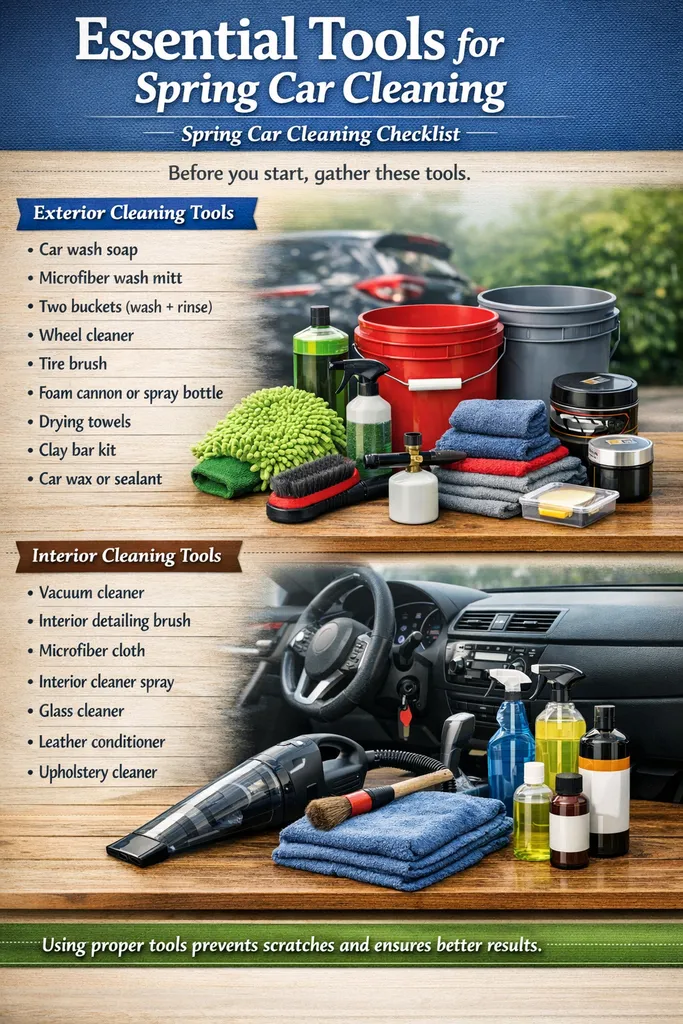
Before you start, gather these tools.
Exterior Cleaning Tools
- Car wash soap
- Microfiber wash mitt
- Two buckets (wash + rinse)
- Wheel cleaner
- Tire brush
- Foam cannon or spray bottle
- Drying towels
- Clay bar kit
- Car wax or sealant
Interior Cleaning Tools
- Vacuum cleaner
- Interior detailing brush
- Microfiber cloth
- Interior cleaner spray
- Glass cleaner
- Leather conditioner
- Upholstery cleaner
Using proper tools prevents scratches and ensures better results.
Spring Car Cleaning Checklist (Step by Step)
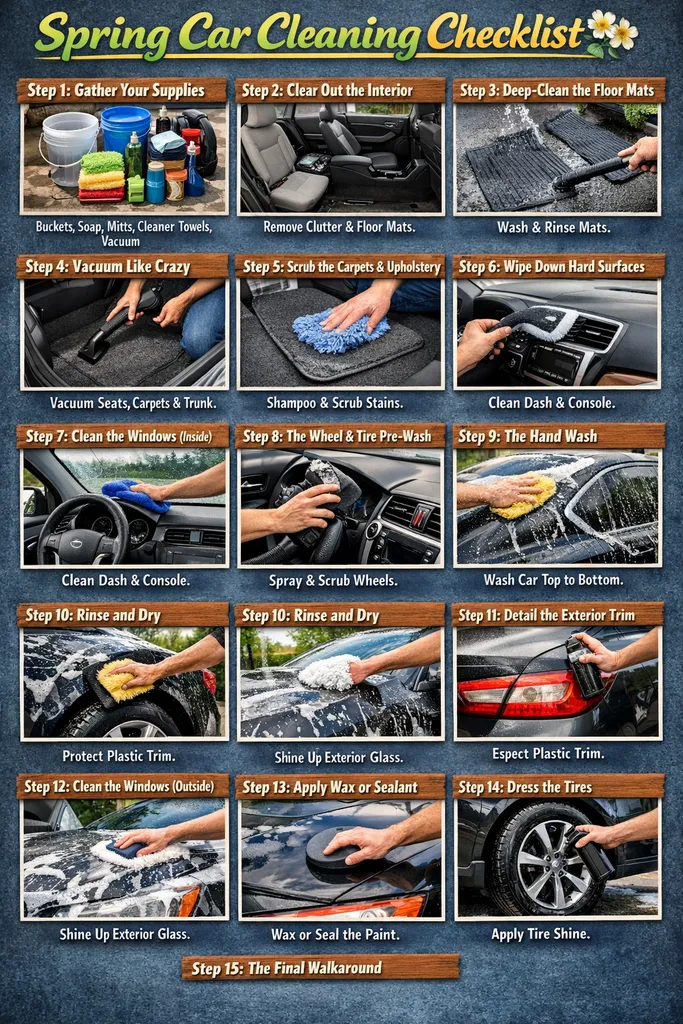
Here is a step-by-step Spring Car Cleaning Checklist in a serial, easy-to-follow format.
Step 1: Gather Your Supplies
- Collect two buckets (one for soap, one for rinse), car wash soap, microfiber mitts, wheel cleaner, tire shine, glass cleaner, microfiber towels, a vacuum, interior wipes, and upholstery cleaner.
Step 2: Clear Out the Interior
- Remove all trash, floor mats, gym bags, and loose items from the cabin. Take everything out to expose all surfaces.
Step 3: Deep-Clean the Floor Mats
- Remove rubber or carpet mats. Spray them down with a hose and scrub with soapy water. Hang them to dry while you work on the rest of the car.
Step 4: Vacuum Like Crazy
- Use a crevice tool to get between seats and center console. Vacuum the carpets, seats, and trunk thoroughly to remove winter sand, salt, and crumbs.
Step 5: Scrub the Carpets and Upholstery
- Treat stains on fabric seats or carpets with a dedicated upholstery cleaner. Agitate with a soft brush and blot dry.
Step 6: Wipe Down Hard Surfaces
- Use an all-purpose cleaner or interior wipes on the dashboard, door panels, center console, and steering wheel. Use a soft brush to get dust out of air vents.
Step 7: Clean the Windows (Inside)
- Spray glass cleaner on a microfiber cloth (not directly on the glass) and wipe all interior windows. Flip the cloth and buff until clear to remove winter haze.
Step 8: The Wheel & Tire Pre-Wash
- Start the exterior by spraying the wheels and tires with a dedicated wheel cleaner. Agitate with a brush to remove brake dust, then rinse thoroughly.
Step 9: The Hand Wash
- Fill one bucket with soapy water and one with plain water. Wash the car from top to bottom using the microfiber mitt, rinsing the mitt in the plain water bucket frequently to avoid scratching the paint.
Step 10: Rinse and Dry
- Remove all soap with a hose. Immediately dry the car using a clean, soft microfiber drying towel or a chamois to prevent water spots.
Step 11: Detail the Exterior Trim
- Apply a protectant or restorer to any black plastic trim, bumpers, or weather stripping that looks faded from winter sun and salt.
Step 12: Clean the Windows (Outside)
- Clean all exterior glass with automotive glass cleaner. Ensure you get the side mirrors and rear window for maximum spring visibility.
Step 13: Apply Wax or Sealant
- Apply a fresh coat of wax or paint sealant to protect the paint from spring pollen, rain, and UV rays.
Step 14: Dress the Tires
- Apply tire shine to the sidewalls for a clean, finished look.
Step 15: The Final Walkaround
- Check and top off windshield washer fluid. Ensure all lights are clean and working. Step back and admire your work.
Optional Deep Cleaning Tasks
Interior Deep Cleaning
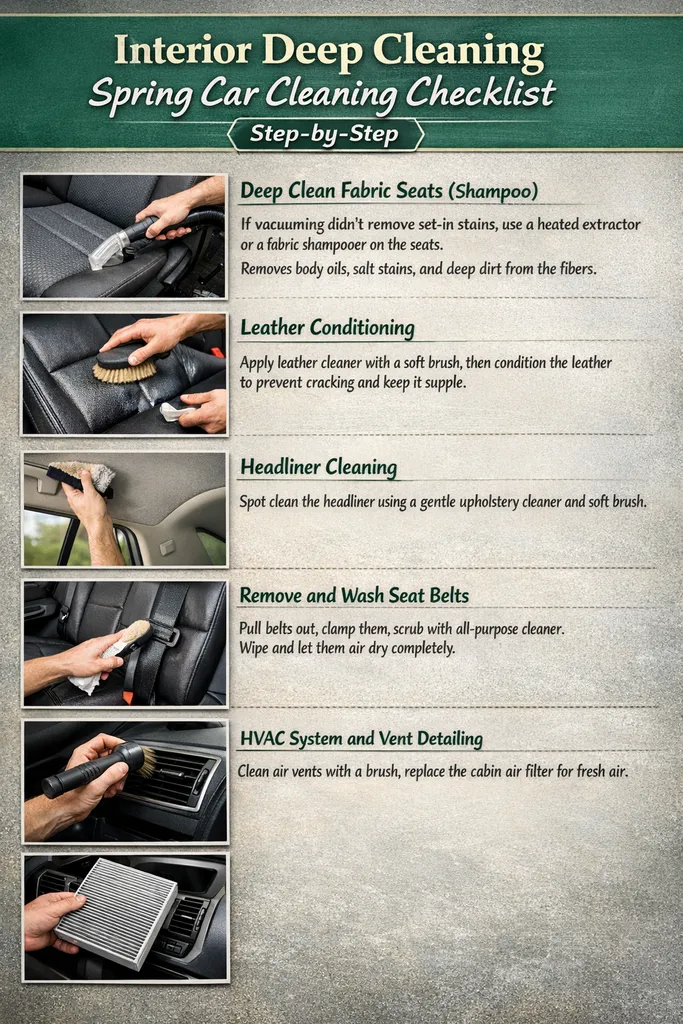
Deep Clean Fabric Seats (Shampoo)
- If vacuuming didn’t remove set-in stains, use a heated extractor or a fabric shampooer on the seats. This removes body oils, salt stains, and deep dirt from the fibers, restoring the original color and texture.
Leather Conditioning
- Go beyond simply wiping leather. Apply a dedicated leather cleaner with a soft brush to get grime out of the grain, then apply a leather conditioner or balm to prevent cracking caused by winter dryness.
Headliner Cleaning
- Carefully spot-clean the headliner (ceiling fabric) using a gentle upholstery cleaner and a very soft brush. This area collects dust and occasional smudges but is easily damaged by excessive moisture or scrubbing.
Remove and Wash Seat Belts
- Pull the seat belts all the way out, clamp them so they don’t retract, and gently scrub the webbing with a diluted all-purpose cleaner. Rinse with a damp cloth and let them air dry completely before retracting.
HVAC System and Vent Detailing
- Use a soft detailing brush or a foaming vent cleaner to reach deep into the air vents. Replace the cabin air filter to ensure spring pollen doesn’t blow into your face.
Exterior Deep Cleaning
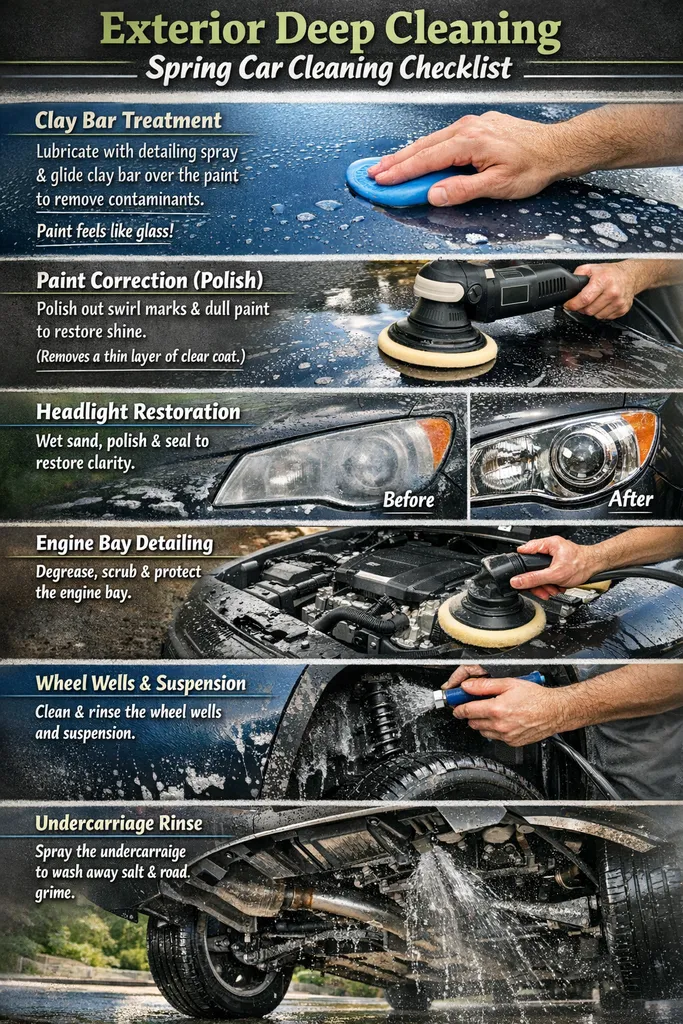
Clay Bar Treatment
- After washing, run a clay bar lubricated with detailing spray over the paint. You will feel it gliding smoothly once it pulls the embedded industrial fallout, rail dust, and tree sap sap out of the clear coat. This makes the paint feel like glass.
Paint Correction (Polish)
- If the paint is dull or has light swirl marks (spider-webbing) from winter brushes, use a polish (by hand or machine) to refine the paint. Note: This is different from wax; it removes a microscopic layer of clear coat to reveal shine.
Headlight Restoration
- If your plastic headlights are hazy or yellowed, wet-sand them with high-grit sandpaper (starting at 800 and moving to 3000) and then polish them. Apply a UV sealant to keep them clear.
Engine Bay Detailing
- Cover sensitive electrical components (alternator, air intake), spray a gentle degreaser on the engine cover and plastic shrouds, agitate with a brush, and rinse with low-pressure water. Finish with a plastic protectant to make it look new.
Wheel Wells and Suspension
- Spray the inner fender liners and suspension components with an all-purpose cleaner and scrub. Rinse thoroughly to remove the salt and mud buildup that accelerates rust.
Undercarriage Rinse
- If you have a pressure washer with an undercarriage attachment (or a garden sprinkler trick), spray the underside of the car to melt away the salt and calcium chloride left over from winter roads.
Mechanical & Maintenance Deep Cleaning
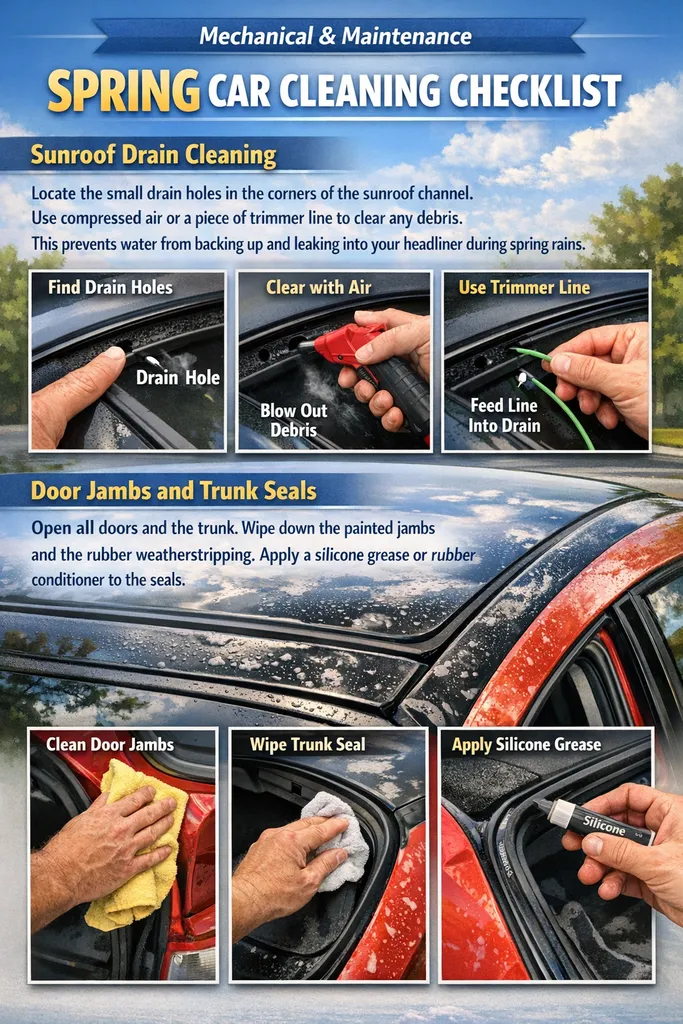
Sunroof Drain Cleaning
- Locate the small drain holes in the corners of the sunroof channel. Use compressed air or a piece of trimmer line to clear any debris. This prevents water from backing up and leaking into your headliner during spring rains.
Door Jambs and Trunk Seals
Open all doors and the trunk. Wipe down the painted jambs and the rubber weatherstripping. Apply a silicone grease or rubber conditioner to the seals to keep them supple and prevent them from freezing next winter.
Common Car Cleaning Mistakes & How to Fix it
Here is a list of Common Car Cleaning Mistakes to avoid. Even with the best intentions, using the wrong technique can turn your spring detail into a trip to the body shop.
Washing Mistakes
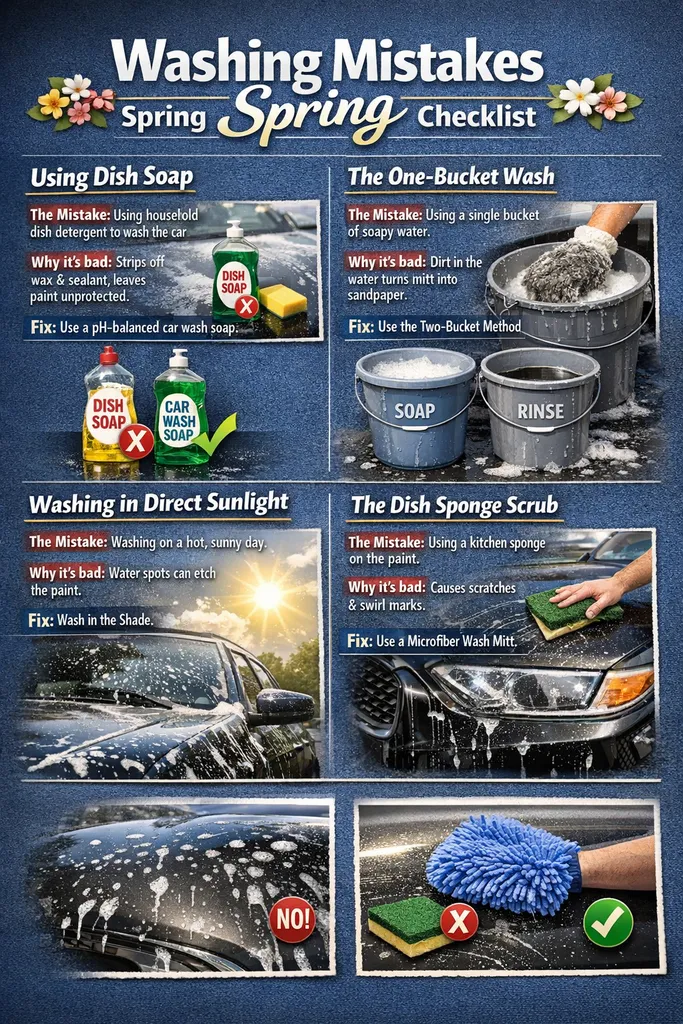
Using Dish Soap
- The Mistake: Using household dish detergent to wash the car.
- Why it’s bad: Dish soap is designed to strip grease and will aggressively strip off any protective wax or sealant, leaving the paint unprotected.
- Fix: Always use a pH-balanced car wash soap.
The One-Bucket Wash
- The Mistake: Using a single bucket of soapy water for the entire wash.
- Why it’s bad: As soon as you dip the dirty mitt back in, you contaminate the soap with grit, turning your wash mitt into sandpaper.
- Fix: Always use the two-bucket method (one for soap, one for rinsing the dirt).
Washing in Direct Sunlight
- The Mistake: Washing or drying the car on a hot, sunny day.
- Why it’s bad: Soap and water dry instantly, leaving stubborn mineral deposits (water spots) that can etch into the paint.
- Fix: Wash in the shade or during cooler morning/evening hours.
The Dish Sponge Scrub
- The Mistake: Using a kitchen sponge (especially the green scrubby side) to clean paint.
- Why it’s bad: Kitchen sponges are abrasive and will leave thousands of fine scratches (swirl marks) in the clear coat.
- Fix: Use a plush microfiber wash mitt or lambswool mitt.
Drying Mistakes
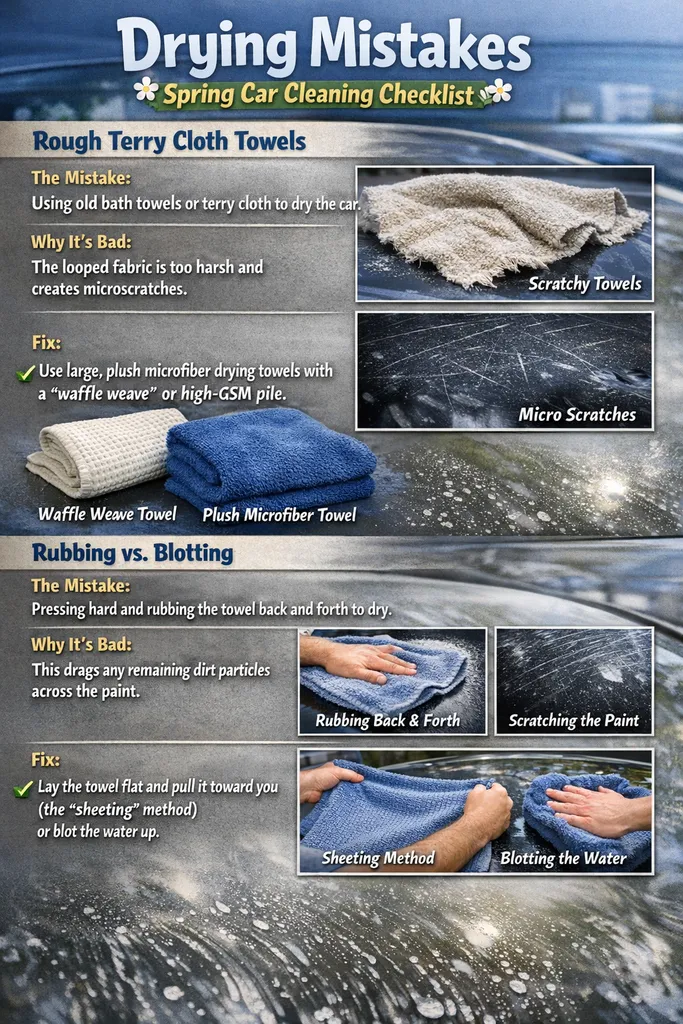
Rough Terry Cloth Towels
- The Mistake: Using old bath towels or terry cloth to dry the car.
- Why it’s bad: The looped fabric is too harsh and creates microscratches.
- Fix: Use large, plush microfiber drying towels with a “waffle weave” or high-GSM pile.
Rubbing vs. Blotting
- The Mistake: Pressing hard and rubbing the towel back and forth to dry.
- Why it’s bad: This drags any remaining dirt particles across the paint.
- Fix: Lay the towel flat and pull it toward you (the “sheeting” method) or blot the water up.
Interior Mistakes
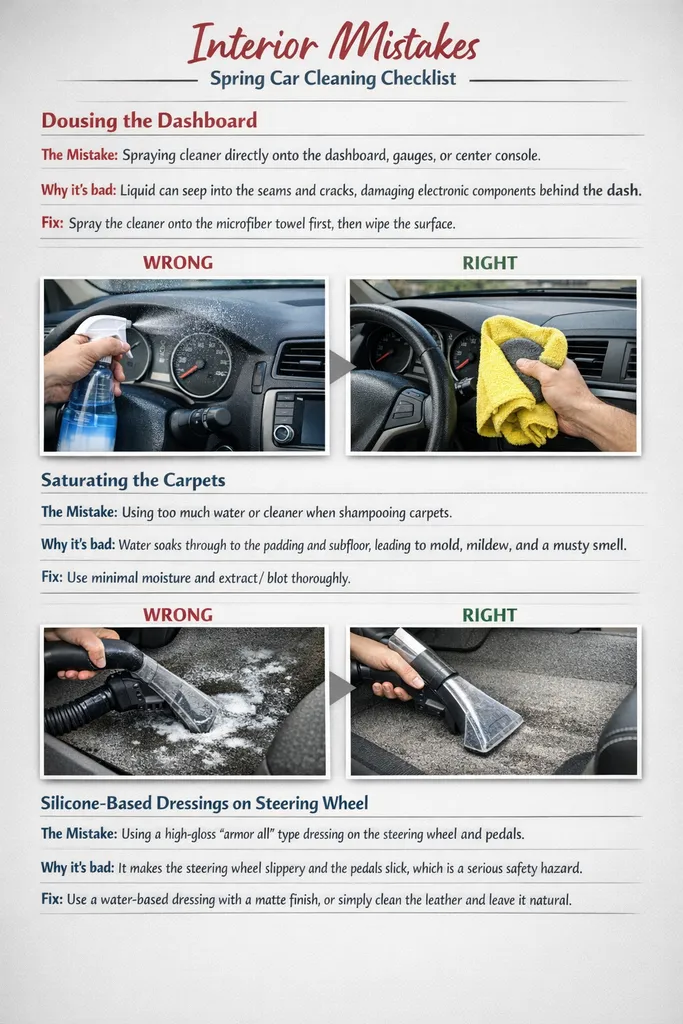
Dousing the Dashboard
- The Mistake: Spraying cleaner directly onto the dashboard, gauges, or center console.
- Why it’s bad: Liquid can seep into the seams and cracks, damaging electronic components behind the dash.
- Fix: Spray the cleaner onto the microfiber towel first, then wipe the surface.
Saturating the Carpets
- The Mistake: Using too much water or cleaner when shampooing carpets.
- Why it’s bad: Water soaks through to the padding and subfloor, leading to mold, mildew, and a musty smell that is nearly impossible to remove.
- Fix: Use minimal moisture and extract/ blot thoroughly.
Silicone-Based Dressings on Steering Wheel
- The Mistake: Using a high-gloss “armor all” type dressing on the steering wheel and pedals.
- Why it’s bad: It makes the steering wheel slippery and the pedals slick, which is a serious safety hazard.
- Fix: Use a water-based dressing with a matte finish, or simply clean the leather and leave it natural.
Wheel & Tire Mistakes
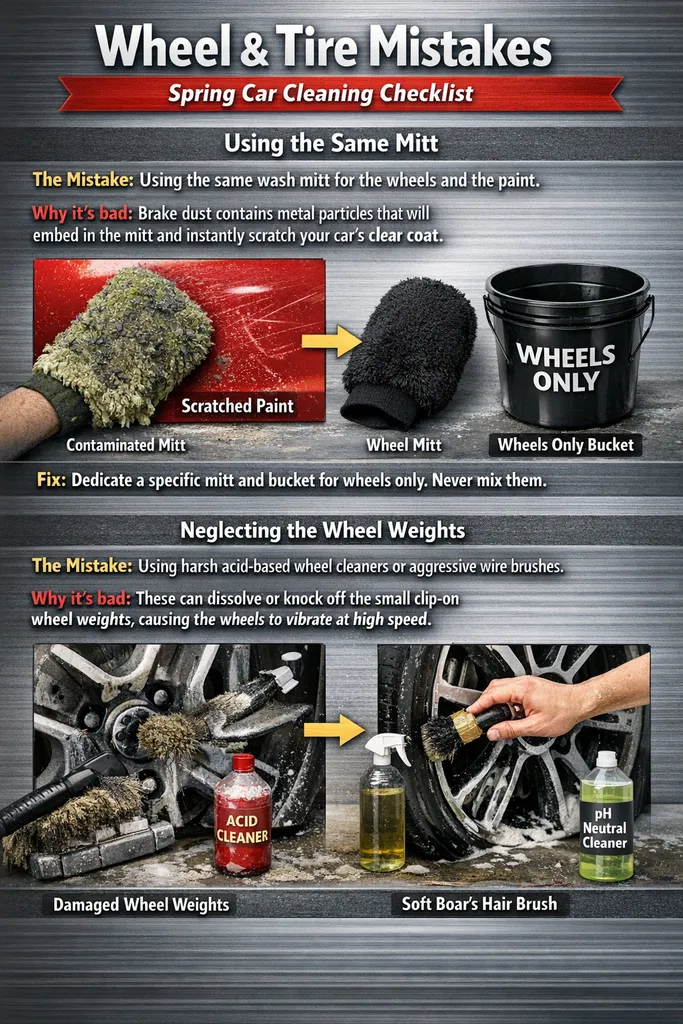
Using the Same Mitt
- The Mistake: Using the same wash mitt for the wheels and the paint.
- Why it’s bad: Brake dust contains metal particles that will embed in the mitt and instantly scratch your car’s clear coat.
- Fix: Dedicate a specific mitt and bucket for wheels only. Never mix them.
Neglecting the Wheel Weights
- The Mistake: Using harsh acid-based wheel cleaners or aggressive wire brushes.
- Why it’s bad: These can dissolve or knock off the small clip-on wheel weights, causing the wheels to vibrate at high speed.
- Fix: Use a pH-neutral wheel cleaner and a soft boar’s hair brush.
The “Quick Detailer” Traps
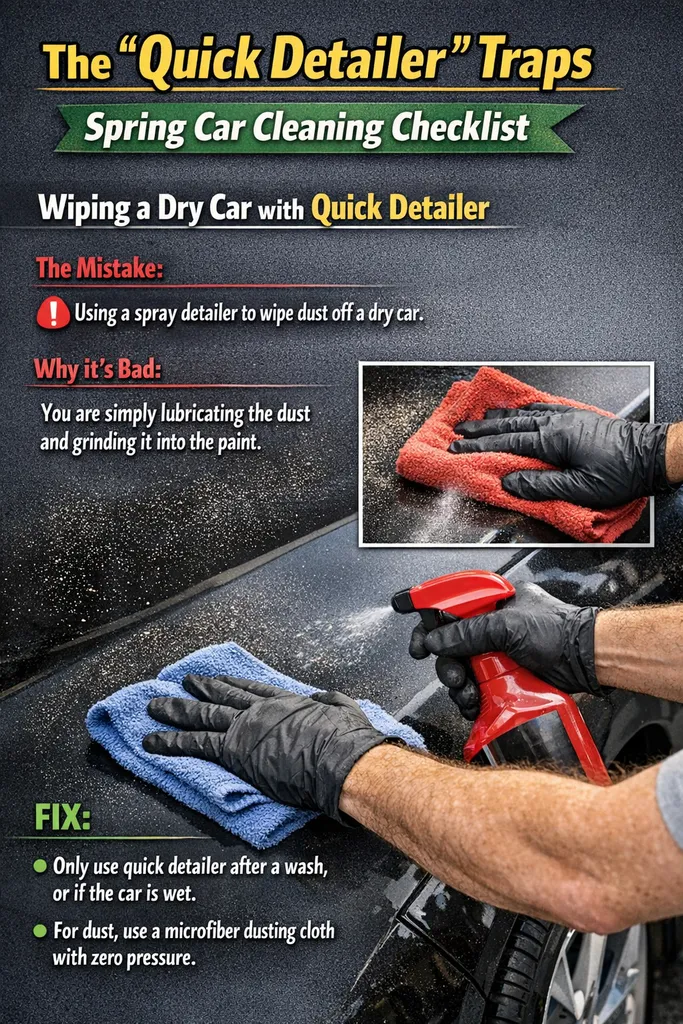
Wiping a Dry Car with Quick Detailer
- The Mistake: Using a spray detailer to wipe dust off a dry car.
- Why it’s bad: You are simply lubricating the dust and grinding it into the paint.
- Fix: Only use quick detailer after a wash, or if the car is wet. For dust, use a microfiber dusting cloth with zero pressure.
Mechanical Mistakes
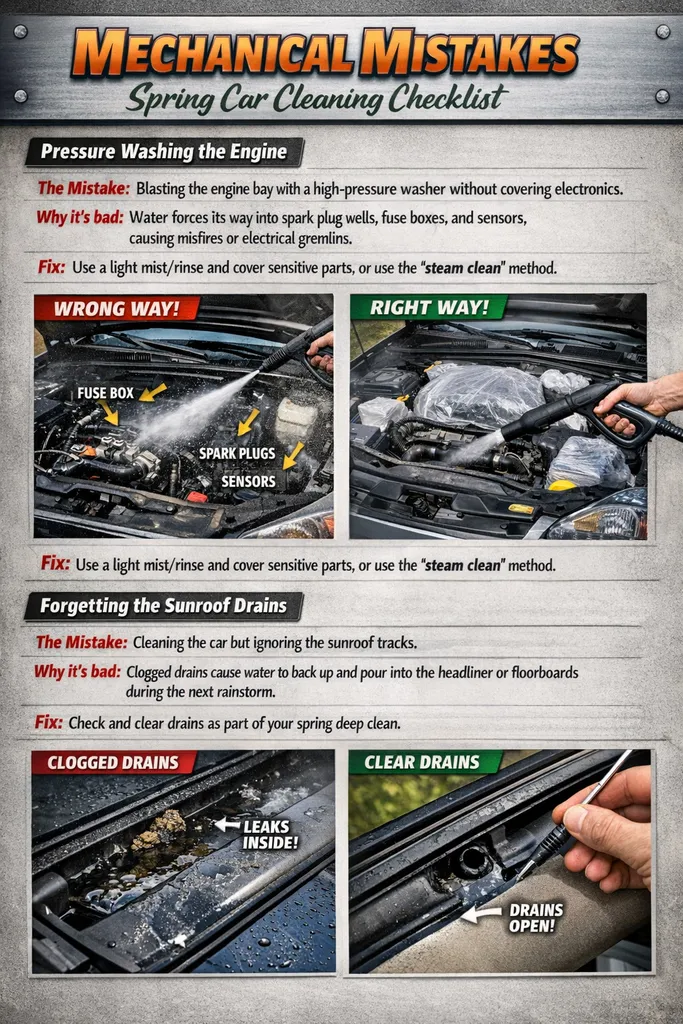
Pressure Washing the Engine
- The Mistake: Blasting the engine bay with a high-pressure washer without covering electronics.
- Why it’s bad: Water forces its way into spark plug wells, fuse boxes, and sensors, causing misfires or electrical gremlins.
- Fix: Use a light mist/rinse and cover sensitive parts, or use the “steam clean” method.
Forgetting the Sunroof Drains
- The Mistake: Cleaning the car but ignoring the sunroof tracks.
- Why it’s bad: Clogged drains cause water to back up and pour into the headliner or floorboards during the next rainstorm.
- Fix: Check and clear drains as part of your spring deep clean.
Recommended Car Cleaning Products
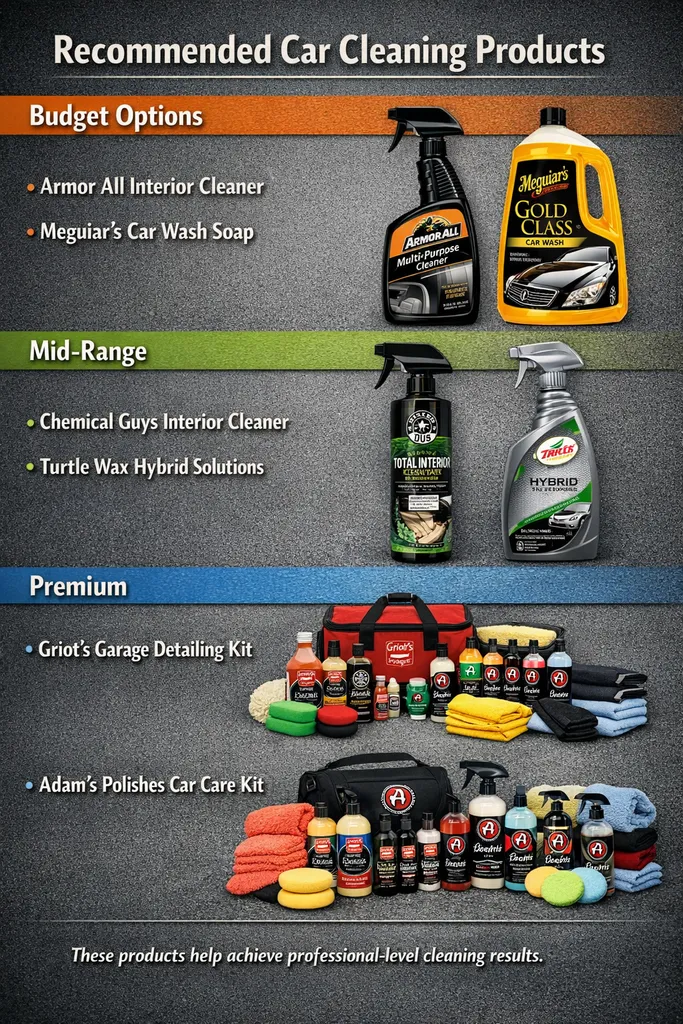
Budget Options
- Armor All Interior Cleaner
- Meguiar’s Car Wash Soap
Mid-Range
- Chemical Guys Interior Cleaner
- Turtle Wax Hybrid Solutions
Premium
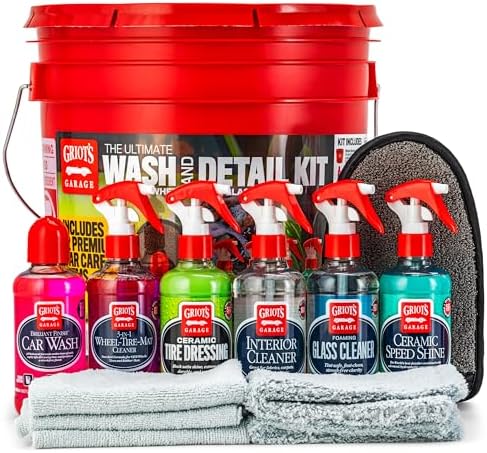
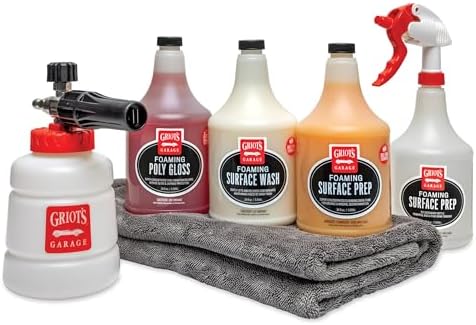
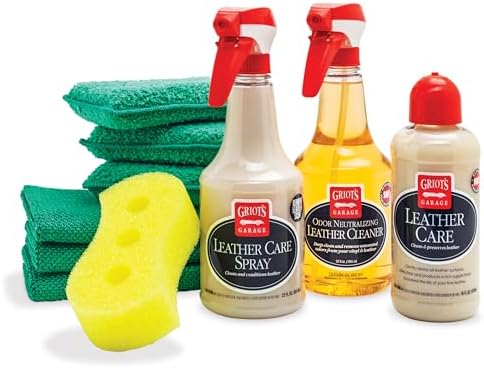
- Griot’s Garage Detailing Kit
- Adam’s Polishes Car Care Kit
These products help achieve professional-level cleaning results.
FAQ
1. How do I remove road salt from the undercarriage without a lift?
Some pressure washers come with an undercarriage water broom attachment. It’s a wheeled bar with nozzles that point up, and it slides under the car. This is critical because salt that gets trapped inside the chassis leads to structural rust you will never see until it’s too late.
2. Should I change my cabin air filter every spring?
Yes.Winter moisture tends to spawn mildew in the filter, and spring brings high pollen counts. Get it replaced in March /April so you do not breathe in that mold spore or allergens when the weather warms up.
3. Why are my wiper blades streaking even after cleaning them?
In winter, Ice and salt also often causes micro-tears of the rubber. If rubbing alcohol doesn’t fix the streak, then the rubber is probably pitted and needs replacing for serious spring rain.
4. Is a “Spring Wax” enough to protect my paint from the sun?
Swap wax for Ceramic Sealants in 2026. Whereas wax melts in extreme heat, a spray-on ceramic sealant offers superior UV resistance and a “self-cleaning” hydrophobic layer that withstands spring showers.
5. How do I get “winter crust” (salt stains) out of car carpets?
Make a 1:1 mixture of white vinegar and hot water. Spray the white crusty section, wait 30 seconds and scrub with a stiff brush. The vinegar’s acidity dissolves the alkaline salt minerals that regular soap will leave untouched.
6. Do I need an alignment check after winter?
Yes. Potholes (the “gift” of winter) are most prevalent during early spring. Even a minor misalignment can, in a few thousand miles, wipe out the life of a new set of spring tires even when the car is not pulling to one side.
7. When is the scientifically “correct” time to swap winter tires?
Replace them when the average daily temperature remains above 7°C (45°F). Winter tires use a softer compound; driving on warm spring asphalt makes them wear down “like an eraser,” dramatically cutting their lifespan.
8. How do I decontaminate paint after a heavy salt season?
Washing isn’t enough. Chemical Decon Step: Use an Iron Remover (spray). It interacts with the minuscule metal particles (from snow plows and brake dust) embedded in your clear coat, turning purple as it makes short work of dissolving the stuff long before you ever touch the paint surface.
9. Does “Engine Bay Cleaning” actually improve performance?
Not directly, but salt and grime on hoses and electrical connectors can contribute to early cracking or corrosion. A light spring degreasing helps you catch fluid leaks early and keep the coolant system efficient as temps rise.
10. The “Spring Scent” Vent Hack?
Rubber pinners are pinching dried sprigs of lavender or using a wooden clothespin with a drop of Lemon or Eucalyptus oil on their clothes instead of the heavy “New Car” chemicals. It feels a little lighter and spring appropriate.
11. How to “Seasonal Swap” your trunk organizer?
Pinterest “Car-ganization” trends for spring involve replacing the heavy ice scrapers and emergency blankets typical of winter with a “Spring Survival Kit”: an umbrella, a lightweight picnic blanket, sunscreen and a microfiber cloth for quick dusting.
12. The “Scrub Ninja” Seat Refresh?
The interior hack the most people saved is using a Scrub Ninja pad with a light APC (All-Purpose Cleaner) for lifting “winter gray” off of light-colored leather or vegan leather seats. It is immensely satisfying to see the vivid color come back.
Final Verdict
Besides looking good, a vehicle that’s well-maintained lasts longer and performs better, retaining more of its value over time. One of the simplest ways to rejuvenate your vehicle after being exposed to months of winter weather is by following a spring car cleaning checklist.
Road salt, mud, and dust all build up throughout the cold months of the year on both the inside and outside of your car. Failing to clean up these elements can result in corrosion, bad smells, and worn-out surfaces over time.
A few hours spent on a proper spring cleaning routine can help restore your car’s shine, improve cabin comfort and protect significant components all in one go. Simple tasks, such as vacuuming the interior, washing the exterior, cleaning wheels and putting on some wax can dramatically improve your vehicle’s look and longevity.
And the best part is, you don’t need costly equipment or professional detailing services. With this guide and some simple tools, anyone can get great results at home.
In the end, having a clean car isn’t simply about looks—it’s about preservation, comfort and pride of ownership.” Beginning your spring cleaning routine today means you can drive around in a car that feels refreshed, looks shiny, and receives protection all year round.




Leave a Reply