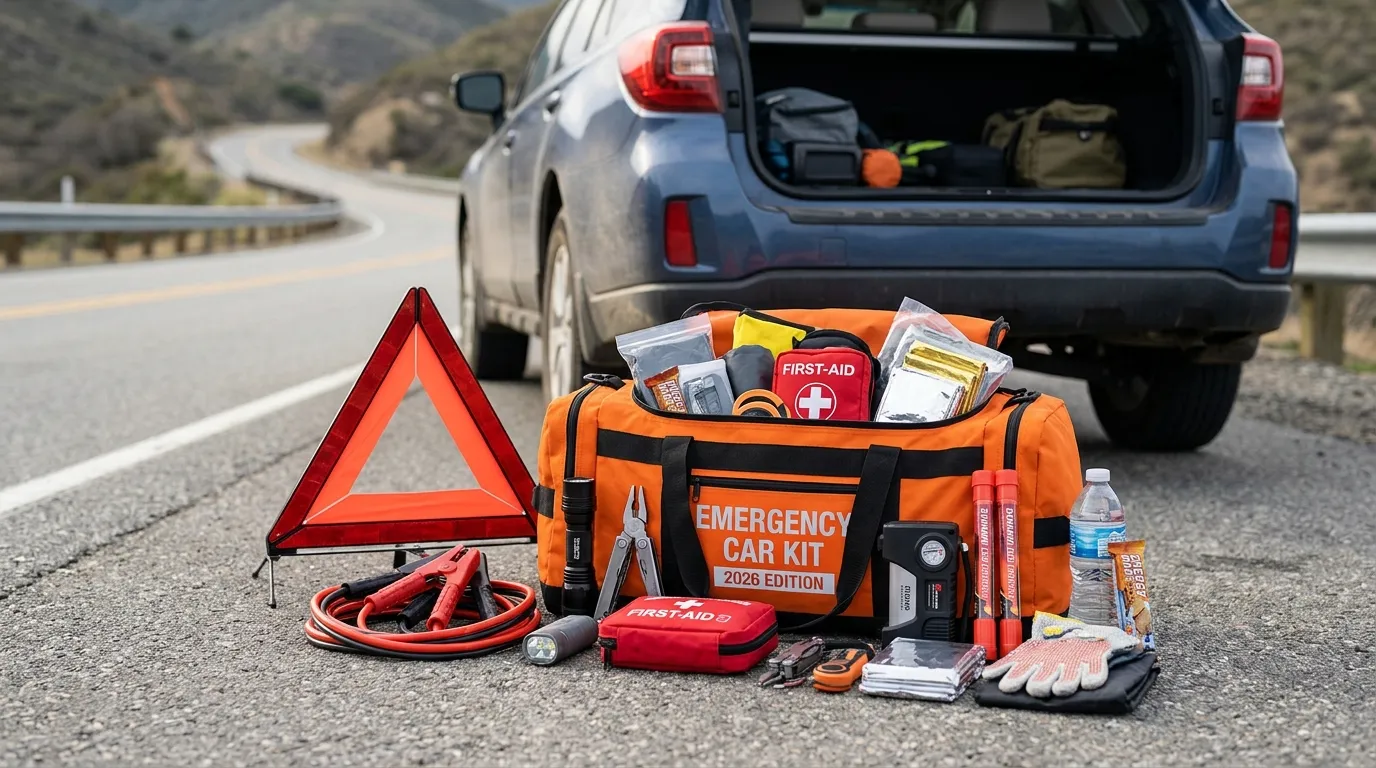
It is 11 PM, you are driving on a dark highway home. Then it goes thump flat tire. Or worse still, it snows to 15C and your engine conks out. But it still falls short when vehicles electronics are arguably smarter than ever in 2026, and tires still go flat, batteries die, and drivers await rescue for hours (or even overnight) ensnared by blizzards. A 10 minute delay without an emergency car kit is a life-threatening crisis. Research by CAA shows that more than 60% of drivers admit they are not ready to deal with an unexpected roadside Emergency Car Kits. Don’t be one of them.
And this complete guide is the solution for it. You will find out precisely how you can create, purchase or upgrade your 2026 emergency car kit. We will have three key simple variations: Basic (city commuter), Standard (family road trip) and Pro (winter/survival). You’ll learn about 17 essentials that pros stash in their trunks and the five dangerous items that should never be in your car. From driving a pint-size car in London, to a rig in Texas, to an SUV in Ontario, this guide gives you the confidence not fear when behind the wheel. When you’re done, you’ll have a beautiful, bespoke, road legal giving your life in an emergency kit.
In This Complete Guide, You’ll Discover
- The 2026 Update: How new EV technology and extreme weather patterns change what you need in your kit.
- 3 Simple Variations: Easy, Top, and Complete kits for city, highway, and wilderness driving.
- The 17-Point Master Checklist: Printable PDF-ready list of every item from first aid to fire extinguishers.
- Buy vs. DIY: The truth about pre-assembled kits vs. building your own (with cost breakdown).
- Seasonal Swaps: Summer cooling gear vs. winter survival (ice scrapers, blankets, sand).
- Storage & Organization: Best trunk organizers, cases, and placement for quick access.
- Legal Requirements: What US states (NY, CA, TX), UK (Highway Code), and Canada (winter tire provinces) legally require.
- Top 5 Best Kits of 2026: Ranked by price, durability, and completeness.
- Maintenance Schedule: How to check and refresh your kit every 6 months.
Top 25 Emergency Car Kit Items & Products for 2026
1. Portable Lithium Jump Starter (NOCO Boost Plus GB40)
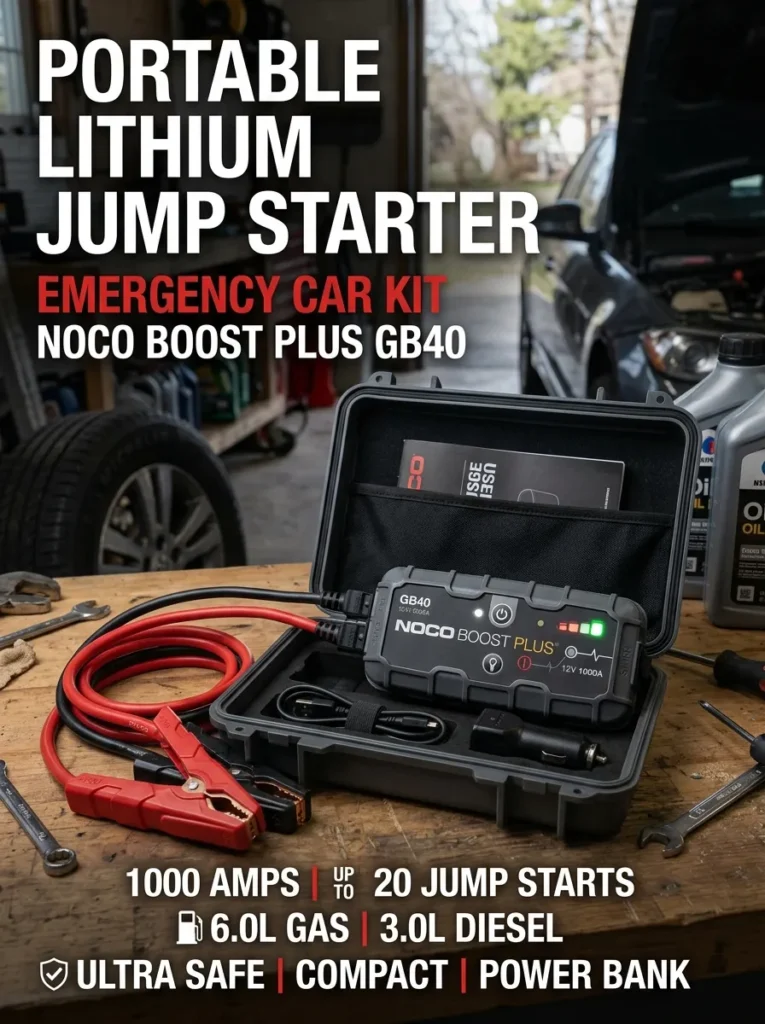
- What it is: A compact, rechargeable battery pack that can jump-start a dead car battery without needing another vehicle.
- Why It’s Important: 28% of roadside emergencies are dead batteries . Cables require a second car; this works alone.
- Benefits: Multiple jumps per charge, USB ports to charge phones, built-in LED light, reverse polarity protection.
- Best For: All drivers, especially those who drive alone or in remote areas.
- Popular Brands: NOCO, Gooloo, Tacklife, VTOMAN.
- Price starts at: Approximately $75–$100 .
2. Combination Tire Inflator & Air Compressor (AstroAI 12V)
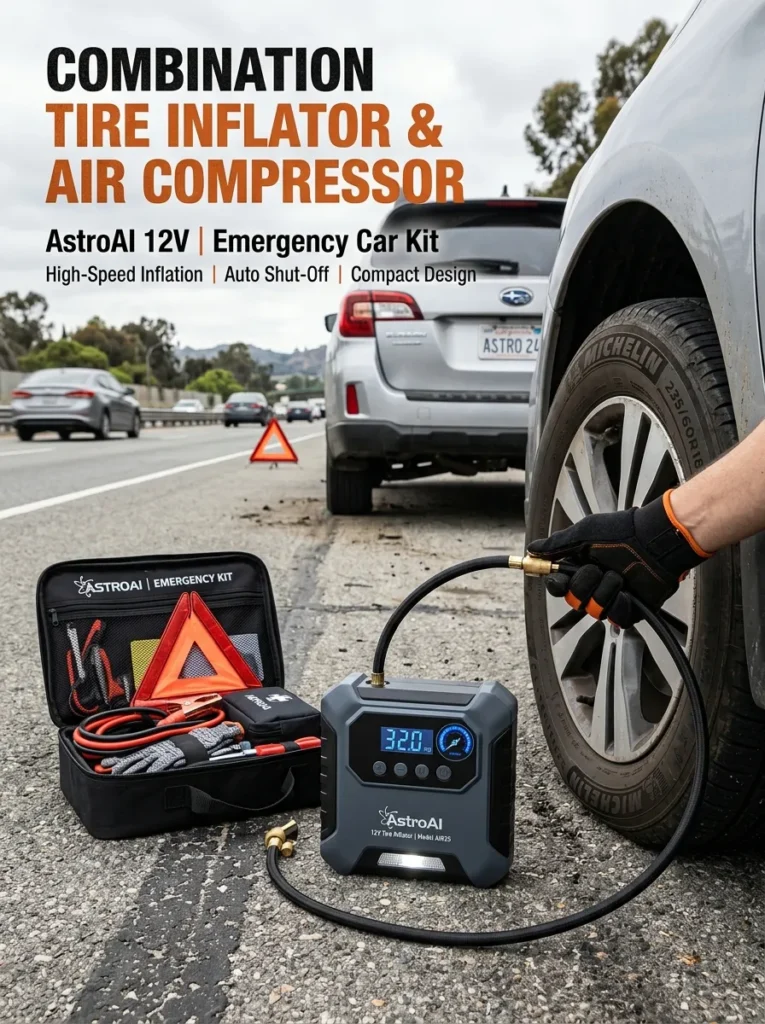
- What it is: A portable pump that plugs into your car’s 12V outlet (cigarette lighter) to inflate flat tires.
- Why It’s Important: Under-inflated tires are the #1 cause of blowouts. Fixing a slow leak on the spot saves you from changing a tire in the rain.
- Benefits: Digital pressure gauge, auto shut-off, fast inflation (0-35 PSI in under 5 minutes).
- Best For: Daily commuters, road trippers, and vehicles without spare tires (EVs).
- Popular Brands: AstroAI, VIAIR, VEVOR, EPAuto.
- Price starts at: Approximately $30–$45 .
3. 6-in-1 Multi-Function Emergency Device (Portronics Vayu Cop)
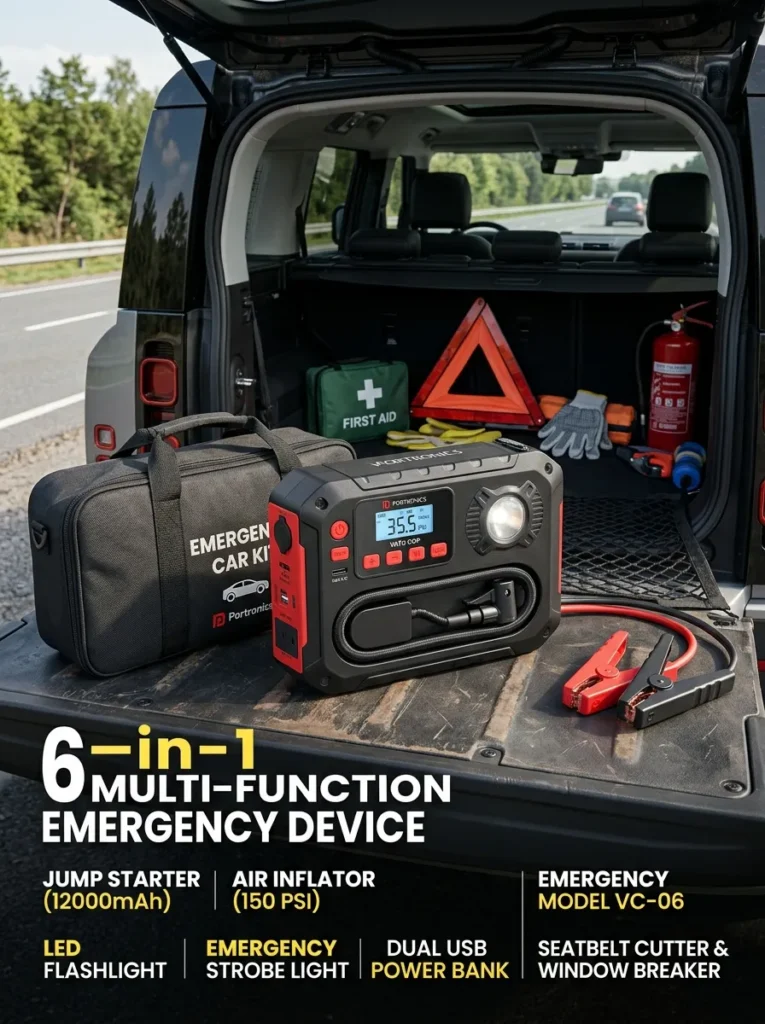
- What it is: A single 2026 device combining a jump starter, tire inflator, vacuum cleaner, air blower, power bank, and SOS flashlight.
- Why It’s Important: Saves trunk space. Instead of carrying 6 separate items, you carry one brick.
- Benefits: 150 PSI inflation, BLDC motor, digital display, Type-C charging.
- Best For: Compact car owners (sedans/hatchbacks) with limited storage.
- Popular Brands: Portronics, Fanttik.
- Price starts at: Approximately $70–$90 .
4. Reflective Road Triangles or LED Flares (Ohuhu 3-Pack)
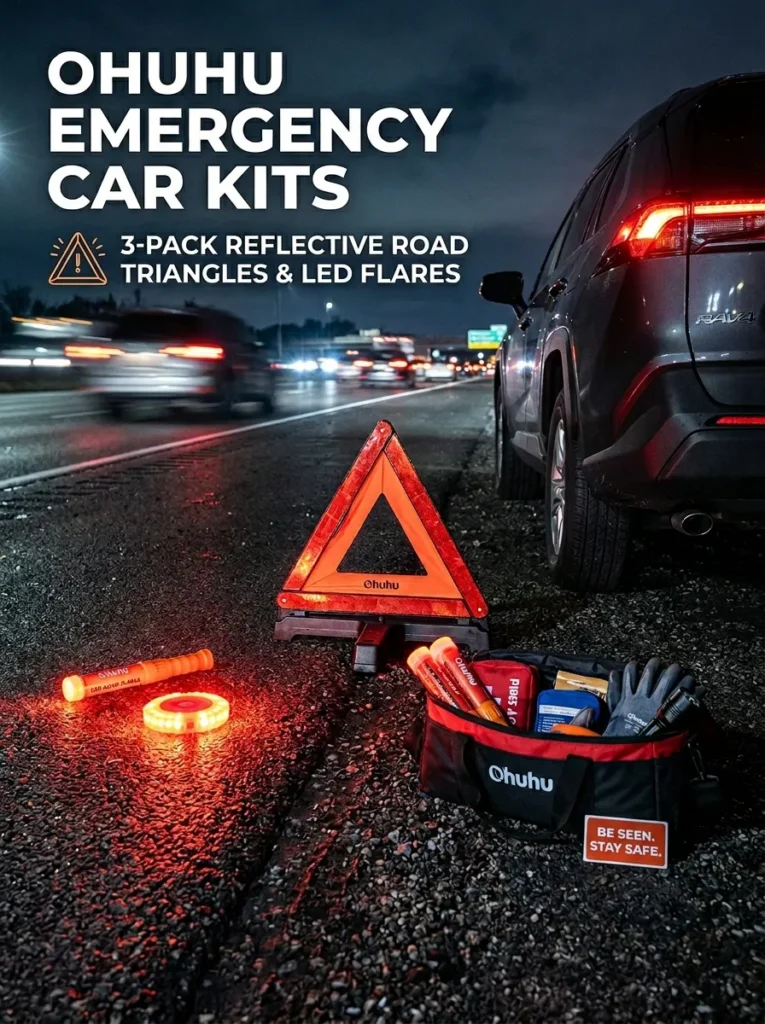
- What it is: Highly visible warning devices placed behind your car to alert oncoming traffic.
- Why It’s Important: Non-negotiable for safety. They create a buffer zone to prevent rear-end collisions while you are stranded.
- Benefits: LED flares are reusable/waterproof; triangles require no batteries. Both fold flat.
- Best For: Highway drivers, night driving, and fleet vehicles.
- Popular Brands: Ohuhu, Smittybilt, Blazin’ Lightz.
- Price starts at: Approximately $16–$25 .
5. High-Visibility Safety Vest (ANSI Class 2)
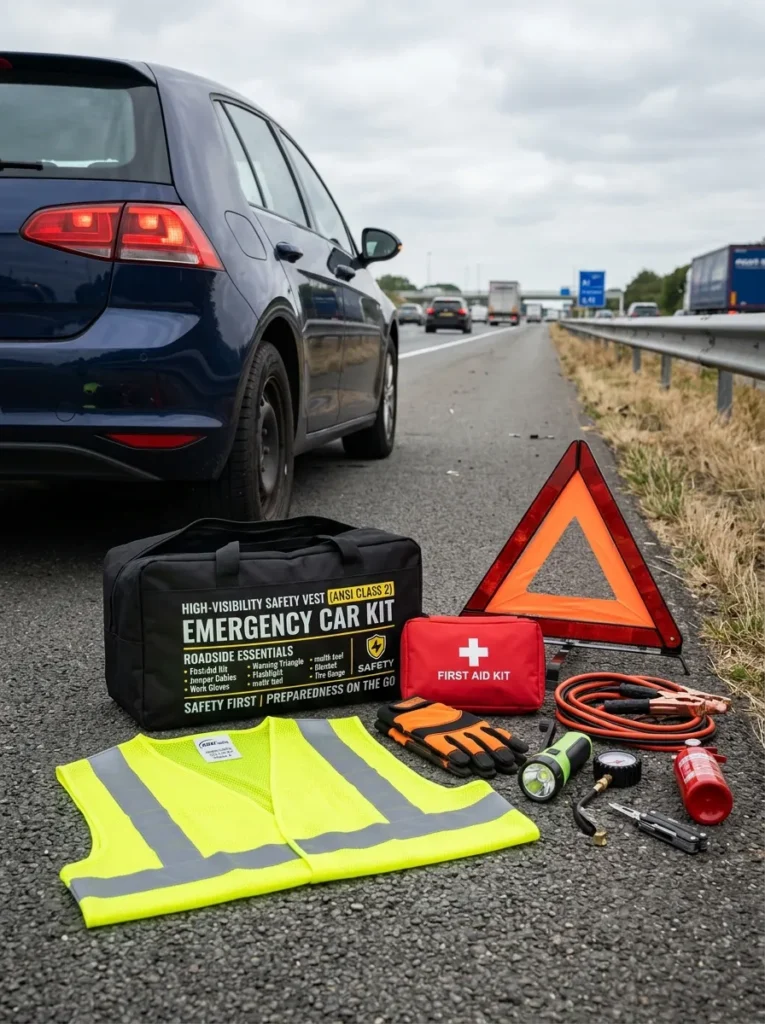
- What it is: A neon yellow/orange reflective vest.
- Why It’s Important: For just a few dollars, it is the best life insurance on the road. Drivers are visible from 1,000+ feet away.
- Benefits: Lightweight, fits over any coat, keeps you safe during tire changes.
- Best For: EVERY driver. Keep it in the glove box (not trunk) so you can put it on before exiting the car.
- Popular Brands: Ergodyne, Thrive, Radians.
- Price starts at: Approximately $5–$10 .
6. Professional-Grade Jumper Cables (4-Gauge, 20+ Feet)
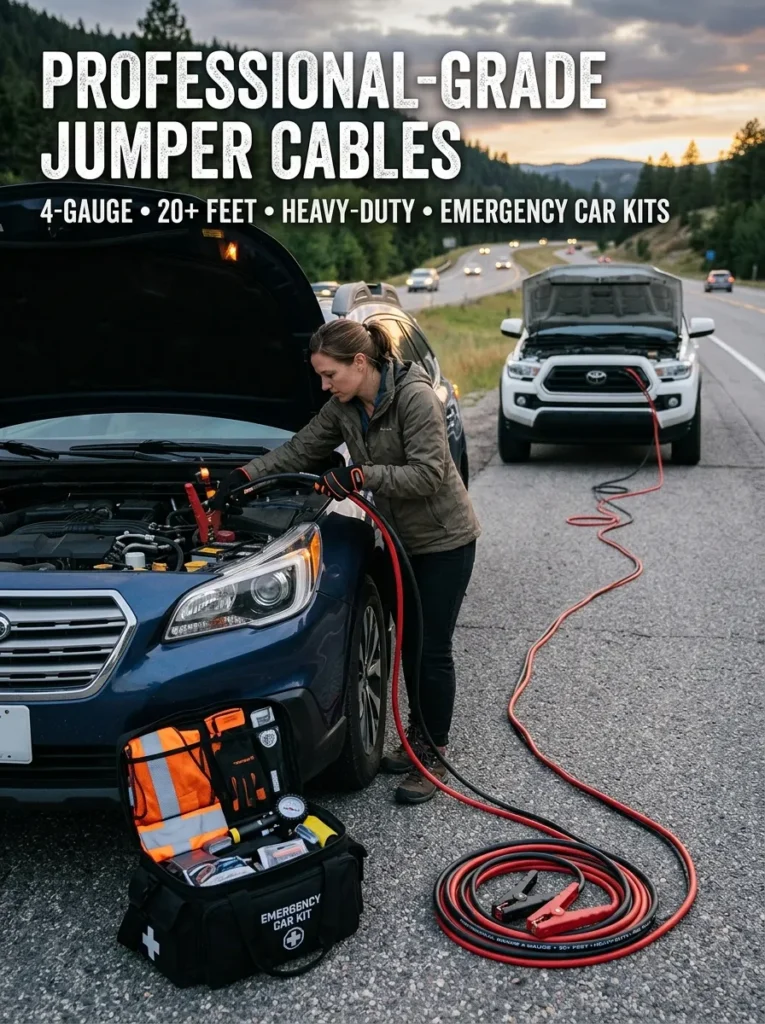
- What it is: Heavy-duty copper cables with clamps to transfer power from a donor battery.
- Why It’s Important: Cheap 10-gauge cables (often in pre-made kits) melt or fail in cold weather.
- Benefits: 4-gauge handles extreme cold (-40°F) and high-amperage trucks.
- Best For: Truck/SUV owners and northern climates (Canada, Alaska).
- Popular Brands: Cartman, Energizer, CPA.
- Price starts at: Approximately $25–$40.
7. Premium All-in-One Roadside Kit (Uncharted Supply Co. The Overlander)
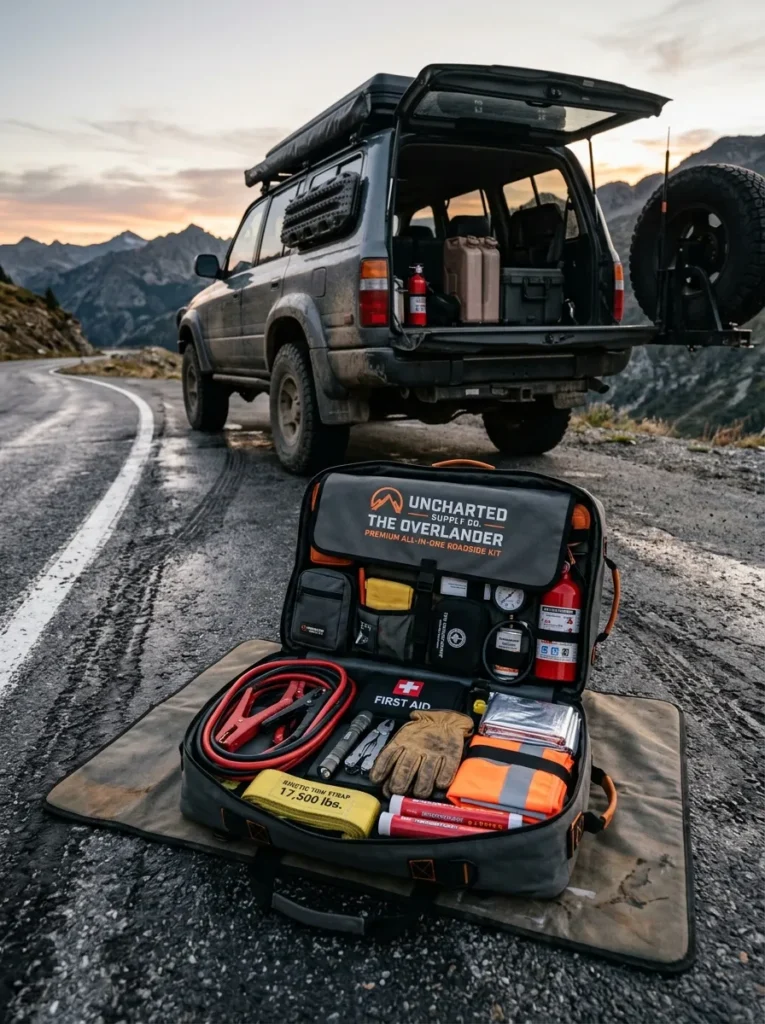
- What it is: The “gold standard” 2026 kit housed in a Yeti waterproof case.
- Why It’s Important: It includes a 55-piece first aid kit, waterproof jacket, carbon steel shovel, tow strap, and jump starter in one box.
- Benefits: Rugged, organized, contains life-saving medical gear beyond band-aids.
- Best For: Overlanders, long-distance travelers, harsh conditions.
- Popular Brands: Uncharted Supply Co., Lifeline (AAA), Everlit.
- Price starts at: Approximately $300–$350 .
8. Winter With Snow Survival Kit (Everlit Survival Kit)
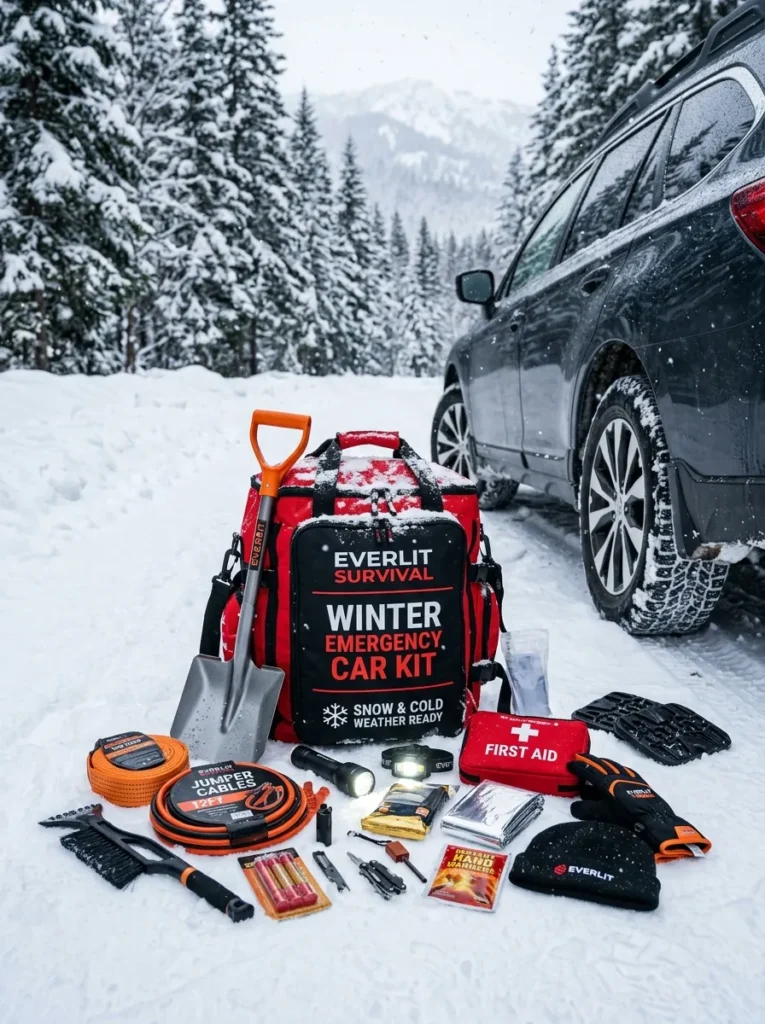
- What it is: A cold-weather specific kit rated for -40°F temperatures.
- Why It’s Important: 70% of winter deaths related to snow/ice occur in cars . Most standard kits freeze solid.
- Benefits: Includes sub-zero sleeping bag, hand warmers, wool socks, and insulated gloves.
- Best For: Northern US states, Canada, mountain pass driving (Oct-Mar).
- Popular Brands: Everlit, Surviveware.
- Price starts at: Approximately $120–$160 .
9. Escape Tool & Seatbelt Cutter (Resqme)
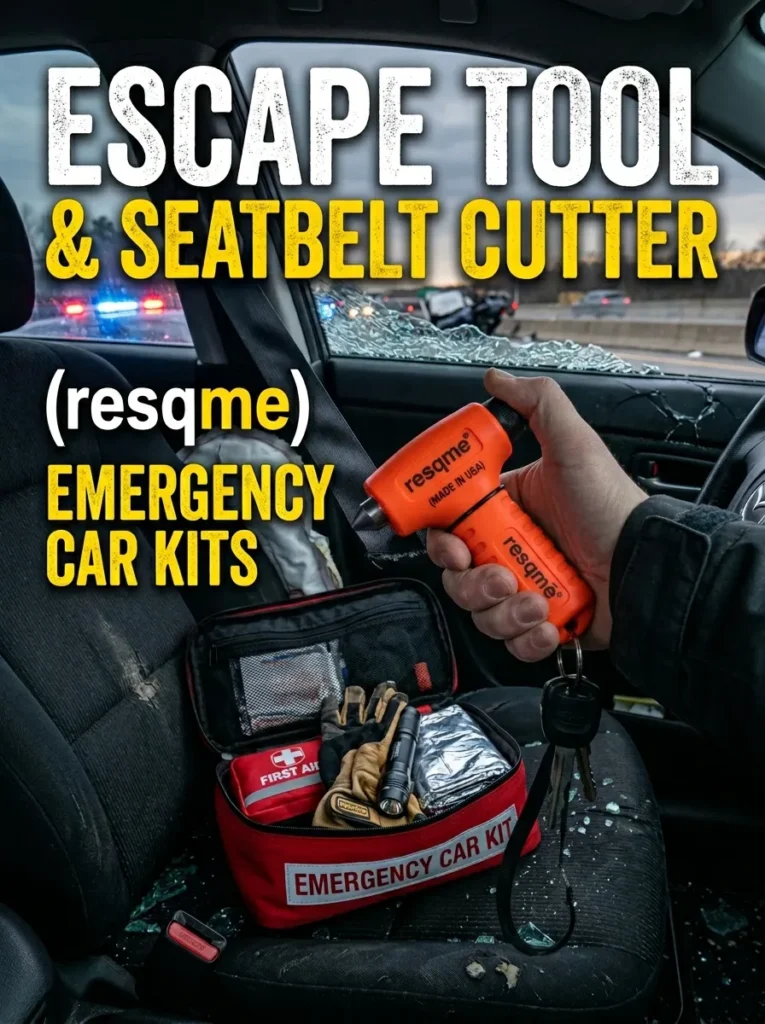
- What it is: A spring-loaded tool with a razor to cut seatbelts and a metal tip to shatter car windows.
- Why It’s Important: In a rollover, submersion (lake/river), or fire, electronic door locks fail. You have 60 seconds to escape.
- Benefits: Keychain size, works underwater, spring-loaded mechanism requires no strength.
- Best For: Families with children, anyone driving near water or busy highways.
- Popular Brands: Resqme, Lifehammer, Ztylus.
- Price starts at: Approximately $10–$15 .
10. Comprehensive First Aid Kit (Redi The Roadie)
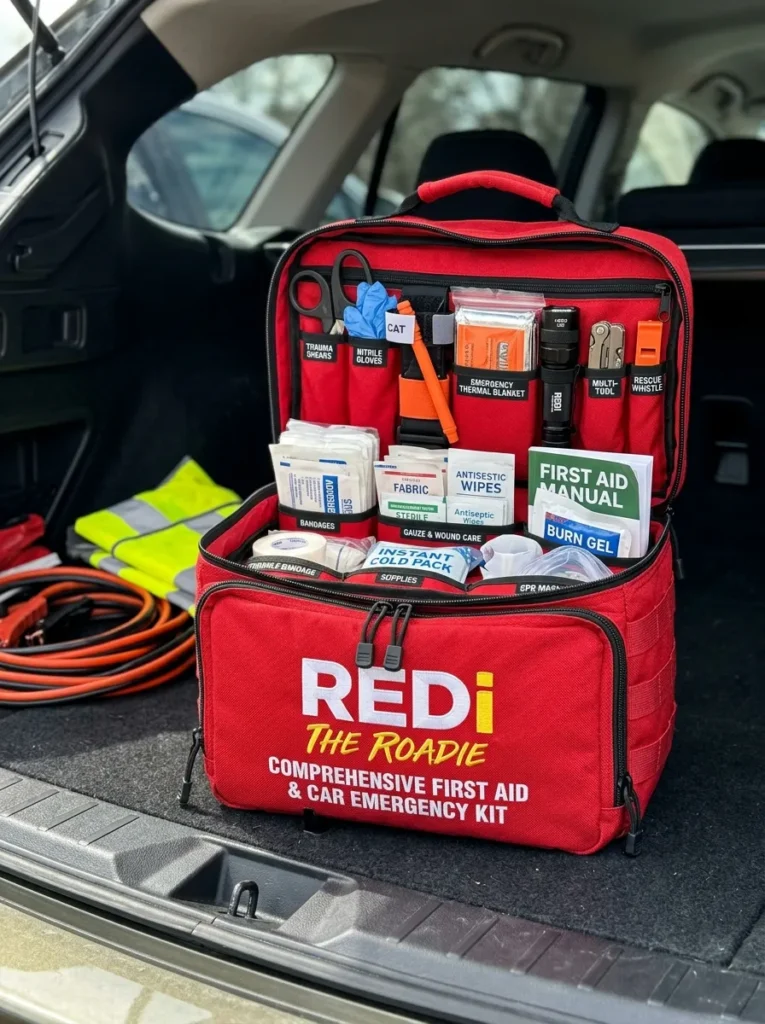
- What it is: A medical-focused kit with color-coded compartments for wound care, medication, and trauma.
- Why It’s Important: Most car kits have only band-aids. The Roadie includes burn gel, tourniquet options, glucose, and cold packs.
- Benefits: Organized to grab supplies in the dark; includes over-the-counter meds (Ibuprofen, Benadryl).
- Best For: Family road trips, diabetics, allergy sufferers.
- Popular Brands: Redi, Surviveware, Swiss Safe.
- Price starts at: Approximately $100–$150 .
11. Compact Folding Shovel (Military Style)
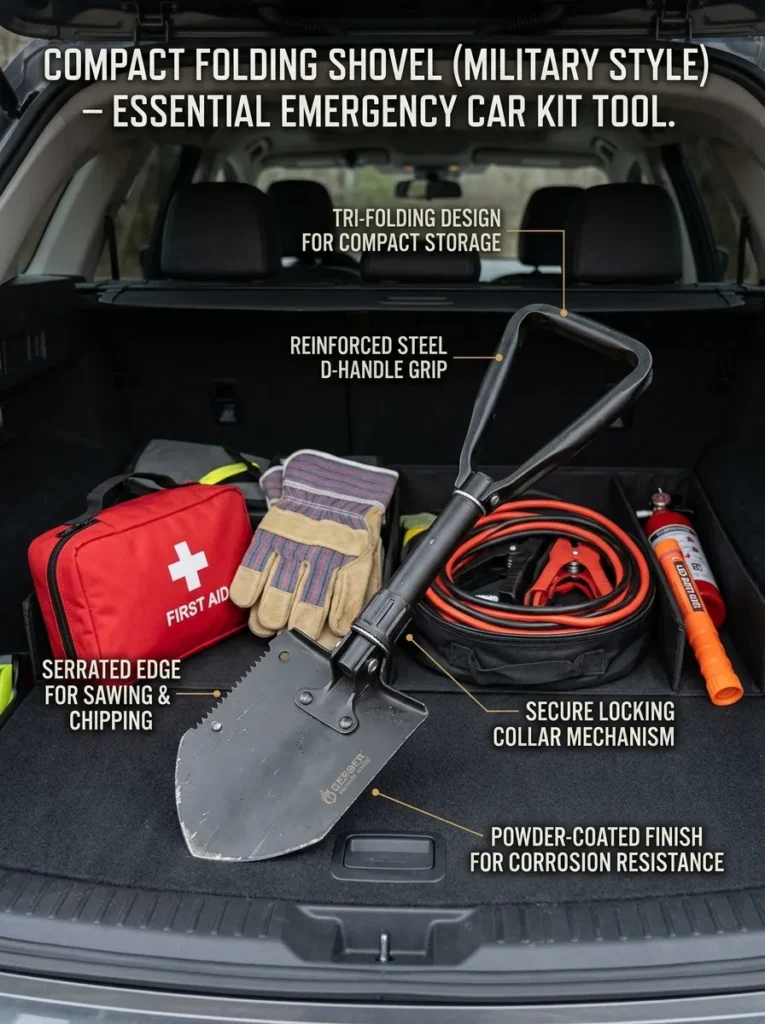
- What it is: A collapsible steel shovel (sometimes with a saw edge).
- Why It’s Important: Essential for digging tires out of snow, mud, or sand. A snow brush won’t cut it.
- Benefits: Folds to fit under a seat, multi-tool functions (saw, pick).
- Best For: Winter driving, beach driving, off-roading.
- Popular Brands: SOG, Gerber, Haiphaik.
- Price starts at: Approximately $15–$30 .
12. Traction Mats or Cat Litter
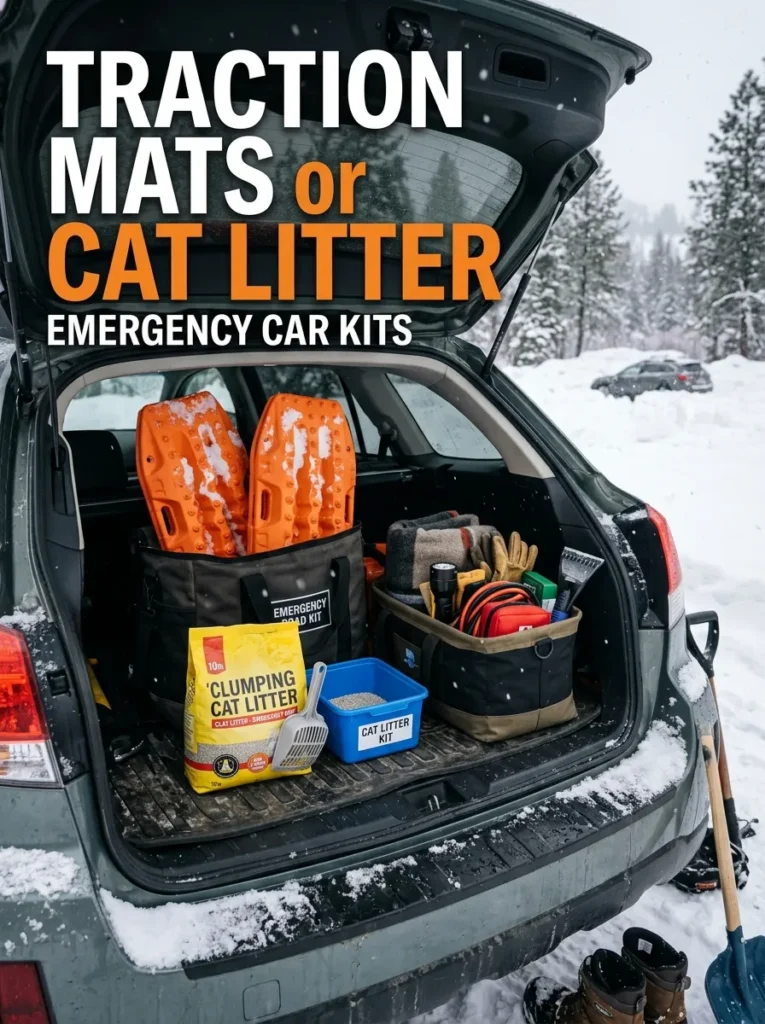
- What it is: Rigid plastic mats placed under spinning tires (or a bag of clay cat litter poured in front of tires).
- Why It’s Important: When ice or mud has you stuck, you need grip. Rocking the car makes it worse.
- Benefits: Mats are reusable; cat litter is cheap and doubles for odor control.
- Best For: Rural drivers, unplowed roads, muddy campsites.
- Popular Brands: MaxTrax, XBull, Generic Clay Litter.
- Price starts at: Approximately $5 (litter) to $70 (mats).
13. Emergency Mylar Blankets & Sleeping Bag
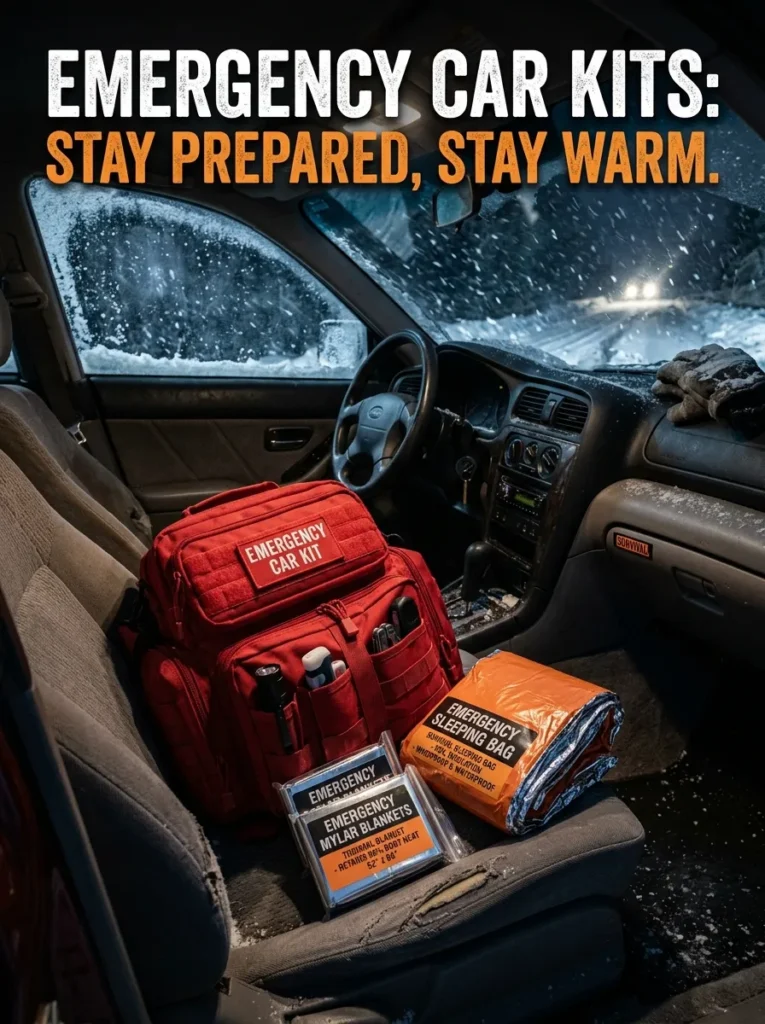
- What it is: Thin, metallic sheets that reflect 90% of body heat back to you.
- Why It’s Important: Hypothermia can set in at 50°F if you are wet or wearing a coat.
- Benefits: Packs to the size of a wallet, waterproof, windproof.
- Best For: Any climate (reflects heat in winter, reflects sun in summer).
- Popular Brands: Go Time Gear, Survive Outdoors Longer.
- Price starts at: Approximately $5–$10 for a 2-pack .
14. Direct-to-Metal Emergency Food Bars (Lifeboat Rations)
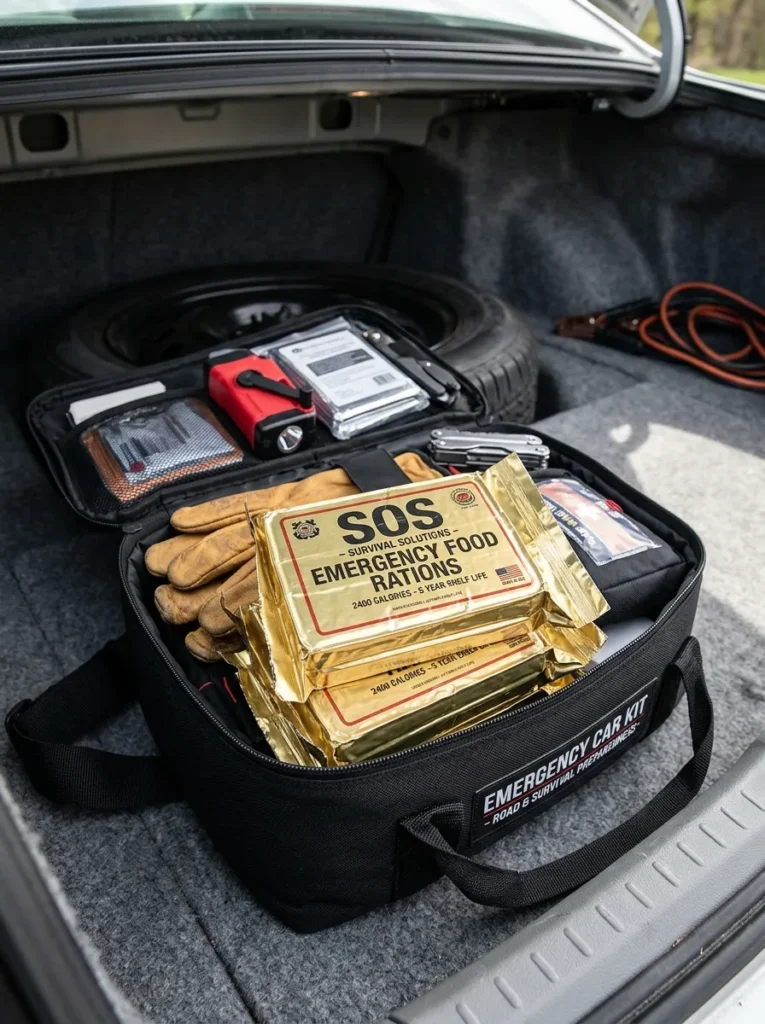
- What it is: High-calorie, non-thirst-provoking bars designed for life rafts.
- Why It’s Important: Granola bars melt or freeze. These withstand -40°F to 300°F and last 5 years.
- Benefits: 2,400 calories per pack (enough for 2 days), lemon flavor prevents thirst.
- Best For: Desert or winter survival kits where heat/cold destroys normal food.
- Popular Brands: Datrex, SOS Rations, Mainstay.
- Price starts at: Approximately $10–$15 per 2400-calorie pack.
15. Water Storage (1 Gallon per Person)
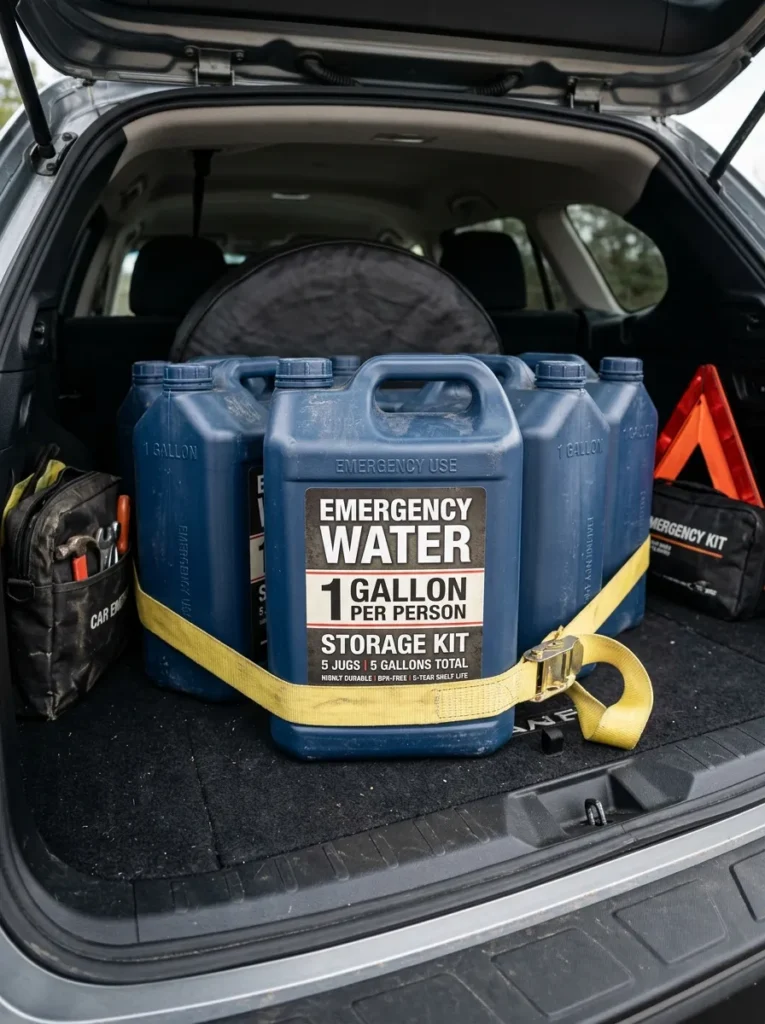
- What it is: BPA-free, heavy-duty water pouches or boxes (not thin disposable bottles).
- Why It’s Important: You can survive 3 days without water, but dehydration impairs judgment in hours.
- Benefits: Boxed water lasts 2+ years; pouches are flat and store easily.
- Best For: Remote travel, summer driving, families.
- Popular Brands: Boxed Water, Datrex water pouches.
- Price starts at: Approximately $10 for a 3-day supply.
16. Multi-Tool with Pliers & Knife (Leatherman Style)
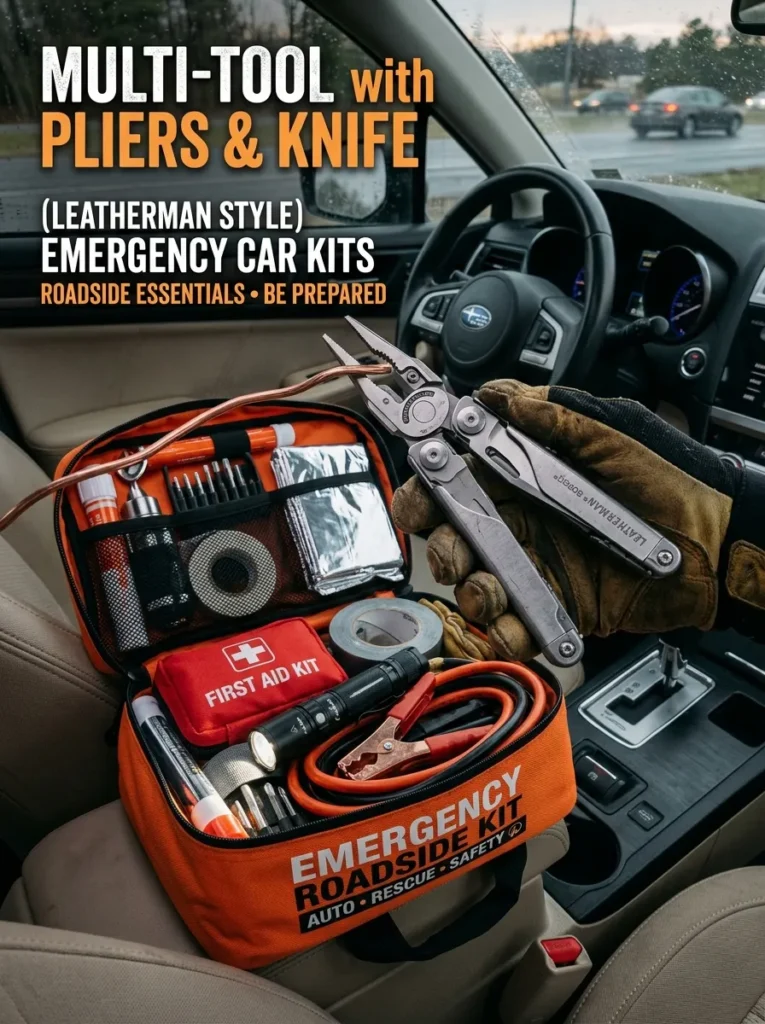
- What it is: A foldable tool containing pliers, wire cutters, knife, screwdrivers, and saw.
- Why It’s Important: You cannot fix a loose battery cable or cut a jammed belt with your bare hands.
- Benefits: 15+ tools in one pocket-sized unit.
- Best For: Minor engine repairs, cutting zip ties, first aid (cutting clothes).
- Popular Brands: Leatherman, Gerber, SOG.
- Price starts at: Approximately $30–$50.
17. Headlamp (Hands-Free Flashlight)
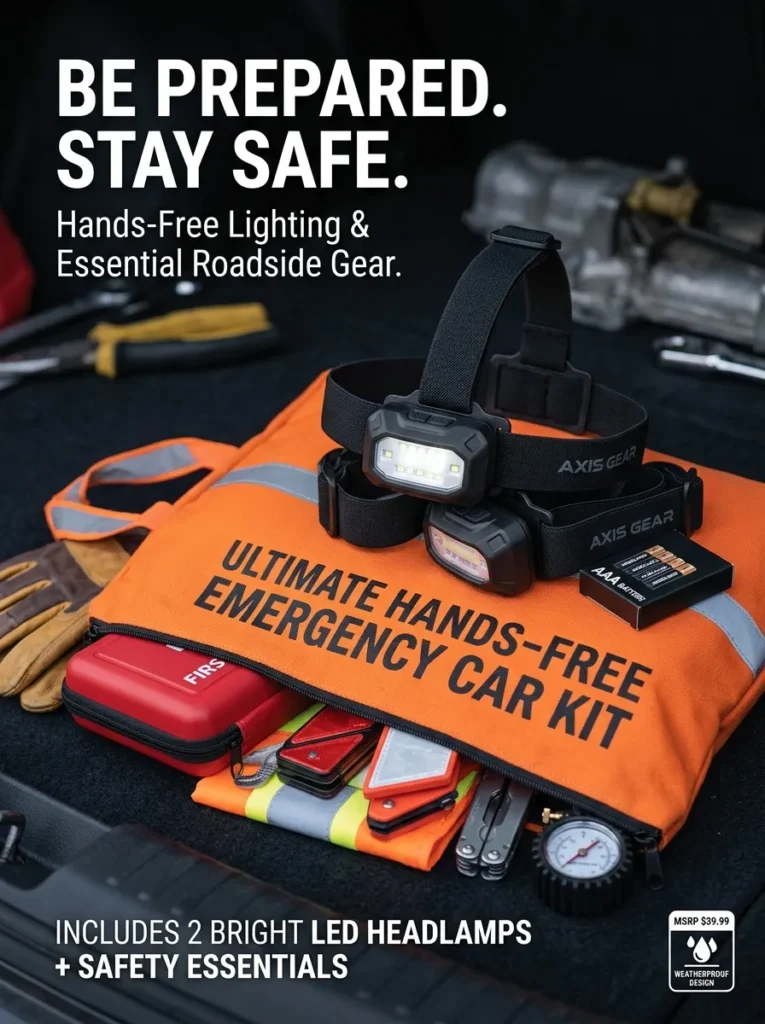
- What it is: A flashlight strapped to your head.
- Why It’s Important: Changing a tire at 2 AM requires two hands. A phone flashlight or standard flashlight forces you to hold it in your mouth.
- Benefits: 500+ lumens, red light mode for night vision, battery efficient.
- Best For: Any nighttime roadside repair.
- Popular Brands: Black Diamond, Energizer, Petzl.
- Price starts at: Approximately $15–$25.
18. Tow Strap (Recovery Rope)
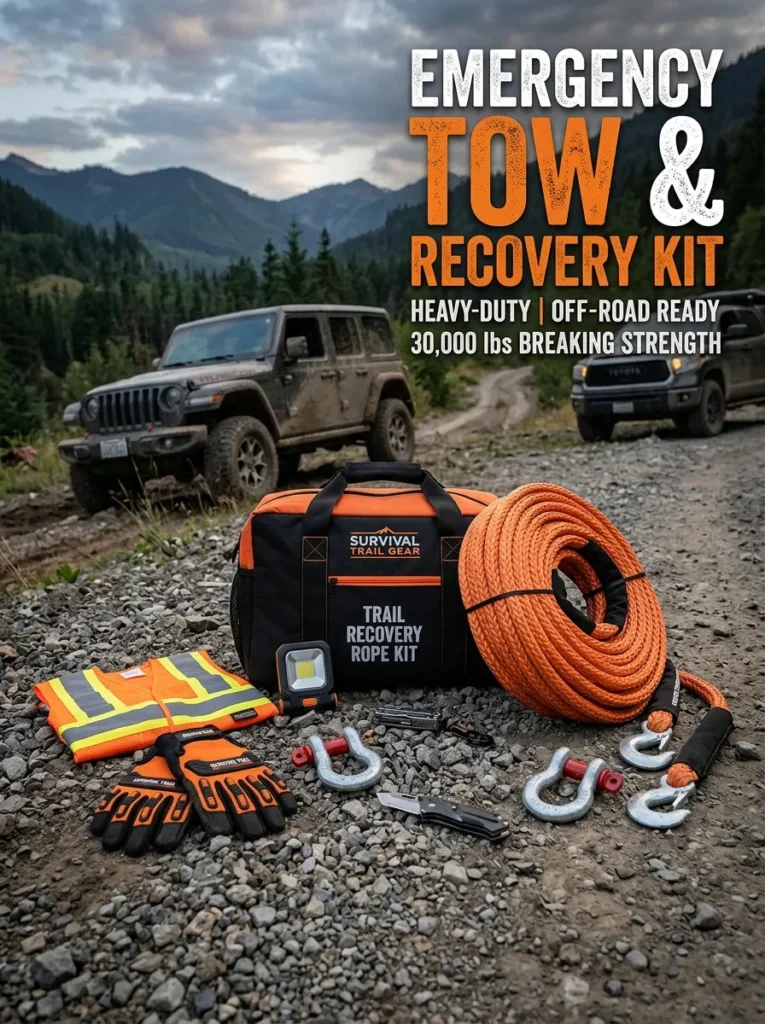
- What it is: A 20,000lb+ rated nylon strap with loops on each end (no metal hooks).
- Why It’s Important: Metal hooks become deadly projectiles if a strap snaps. Nylon loops stretch to absorb shock.
- Benefits: Pulls trucks out of ditches; much stronger than a tow chain.
- Best For: Truck/SUV owners, rural areas, winter driving.
- Popular Brands: Rhino USA, Smittybilt, ARB.
- Price starts at: Approximately $25–$50 for 20ft 20k lbs .
19. Tire Plug & Patch Kit (Tubeless Repair)
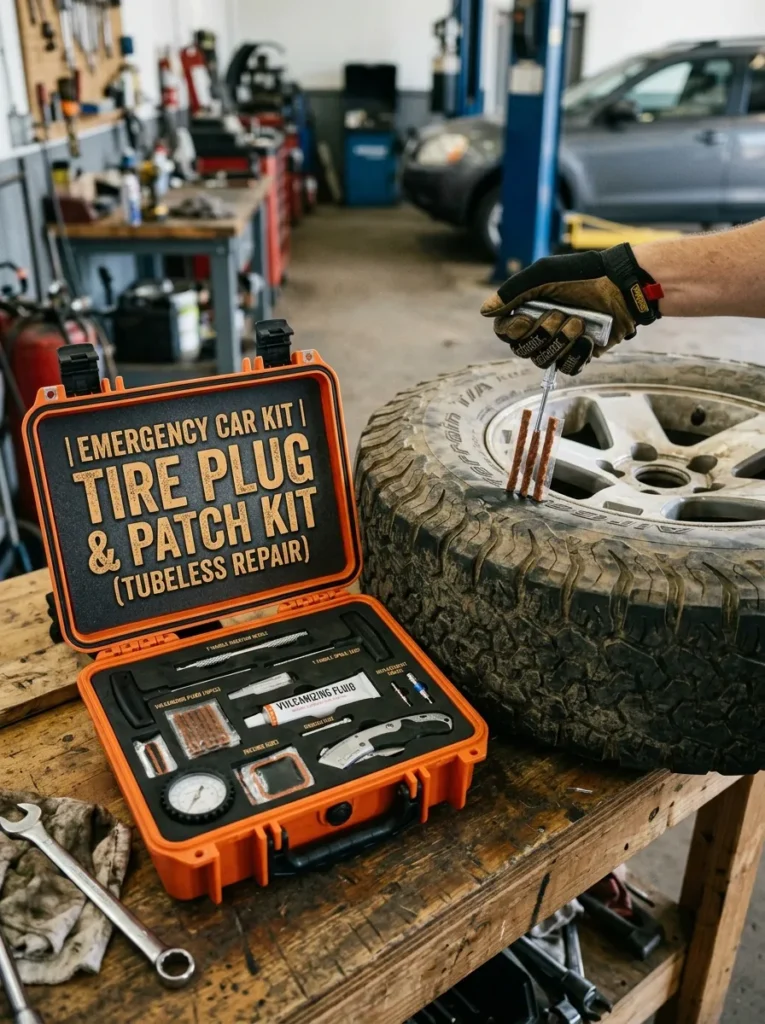
- What it is: A kit with a rasp tool, insertion needle, and sticky rubber plugs.
- Why It’s Important: A nail in the tread is the most common flat tire. You can plug it in 5 minutes without removing the wheel.
- Benefits: Temporary repair (drive 100+ miles) until you reach a shop.
- Best For: Anyone without a spare tire (modern sedans, EVs).
- Popular Brands: Slime, Safety Seal, VIAIR.
- Price starts at: Approximately $8–$15 .
20. Heavy-Duty Duct Tape & Zip Ties
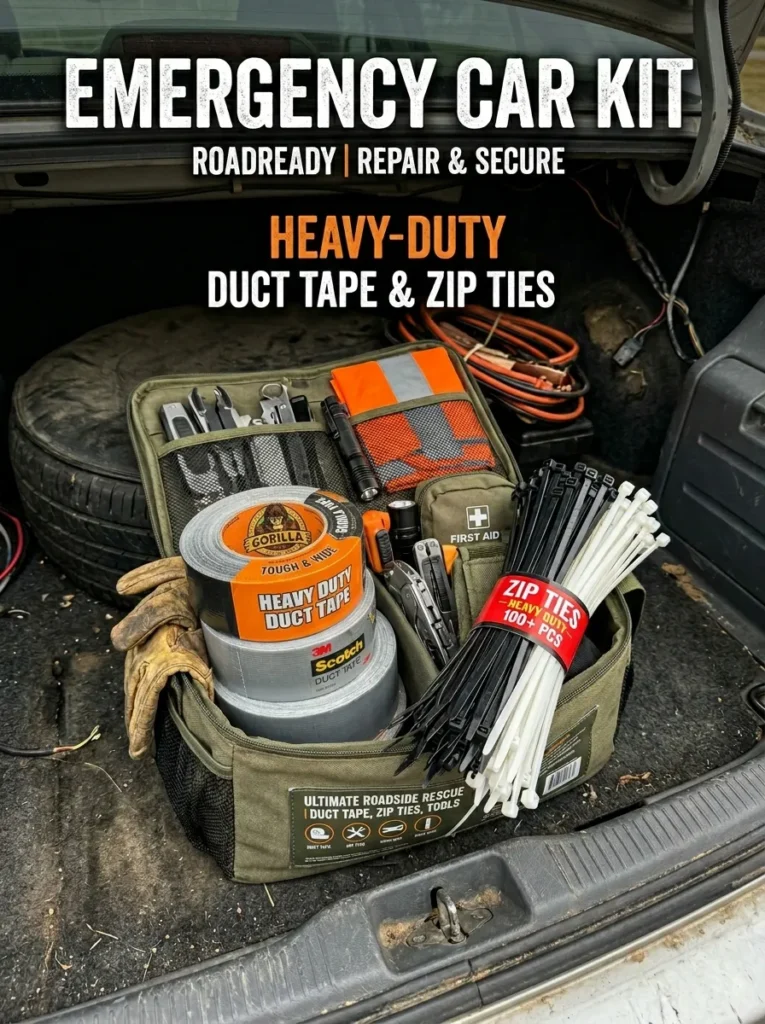
- What it is: High-adhesion tape and nylon locking ties.
- Why It’s Important: Temporary fixes for falling bumpers, broken hoses, ripped CV boots, or holding a window up.
- Benefits: “It ain’t stupid if it works.” Fixes 1,000 problems.
- Best For: All drivers. Wrap duct tape around an old credit card to save space.
- Popular Brands: Gorilla Tape, 3M.
- Price starts at: Approximately $5 (travel size).
21. Hand-Crank Emergency Radio & Flashlight
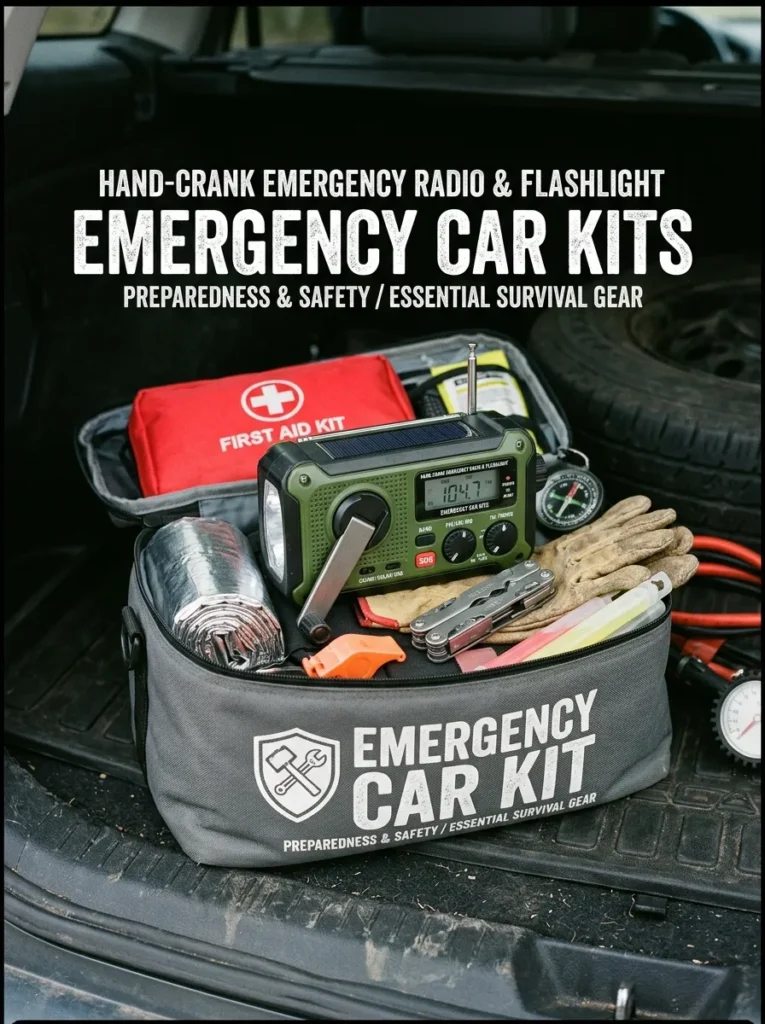
- What it is: A radio with a hand crank, solar panel, flashlight, and phone charger.
- Why It’s Important: When batteries die or cell towers go down (widespread power outage), NOAA weather radio is your only information source.
- Benefits: No batteries required, AM/FM/NOAA bands, SOS alarm.
- Best For: Hurricane, tornado, or wildfire prone areas.
- Popular Brands: RunningSnail, Esky, Midland.
- Price starts at: Approximately $20–$30.
22. Road Flares (Pyrotechnic vs. LED)
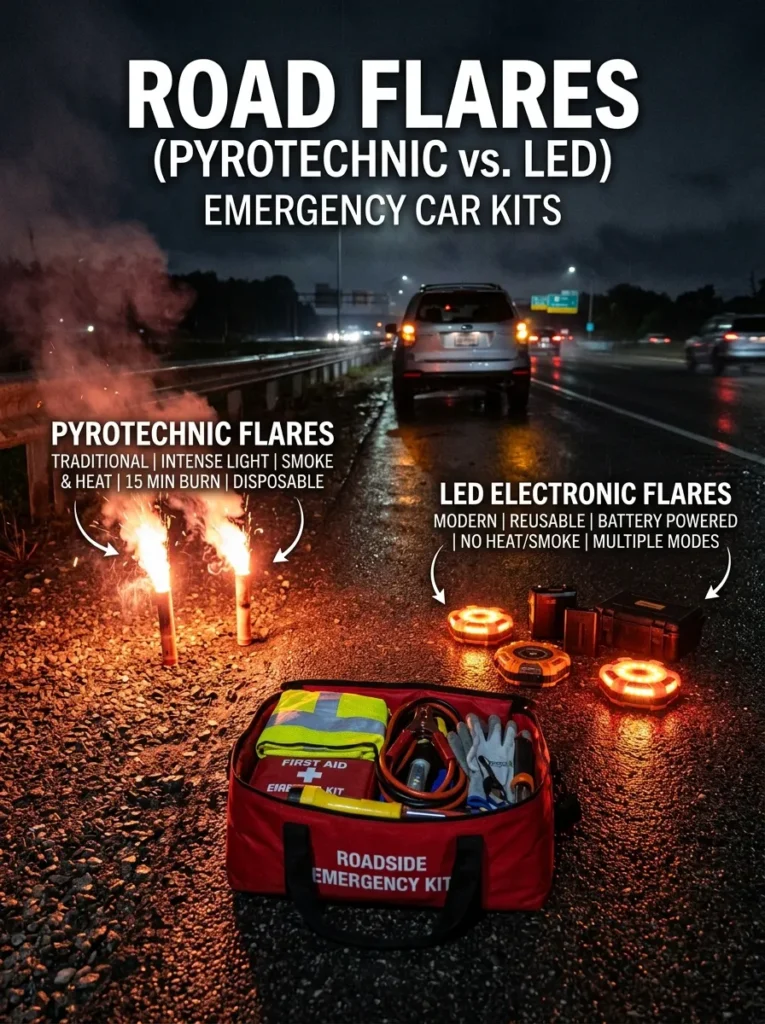
- What it is: Bright red safety lights. Pyrotechnic = burning chemical. LED = rechargeable blinking lights.
- Why It’s Important: Flares are visible from 1 mile away. LED flares are safer (no fire risk), but pyrotechnic works even if battery is dead.
- Benefits: Pyro works in any weather; LED is reusable.
- Best For: Highways at night or fog.
- Popular Brands: Orion (pyro), Blazin’ Lightz (LED).
- Price starts at: Approximately $10 for 3 (pyro) / $30 for 2 (LED).
23. OEM Factory Emergency Kit (Infiniti With Tesla With Ford)
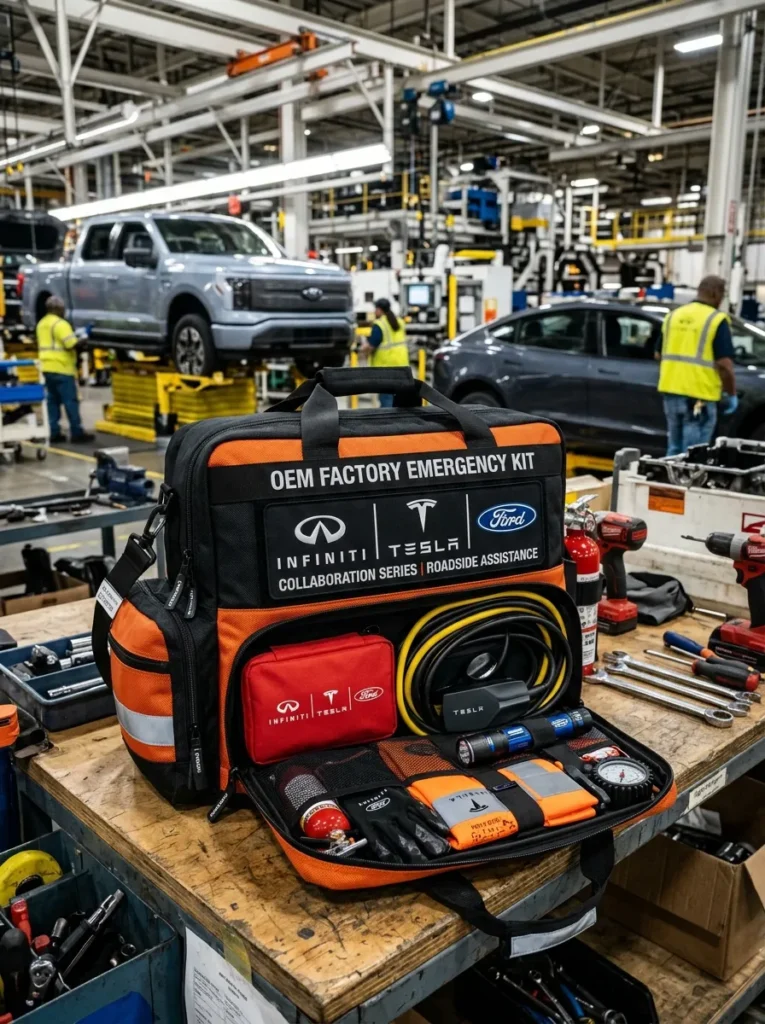
- What it is: A brand-specific kit designed to fit perfectly in your vehicle’s trunk or frunk.
- Why It’s Important: Aftermarket kits bounce around. OEM kits have custom cutouts and match your vehicle’s specific tools (lug nut size, jack points).
- Benefits: Maintains resale value, guaranteed fit, includes thermal blanket specific to car type.
- Best For: Luxury car owners, EVs (frunk storage).
- Popular Brands: Infiniti, Mercedes, BMW (dealership parts).
- Price starts at: Approximately $90–$130 .
24. Windshield De-Icer & Ice Scraper (Winter)
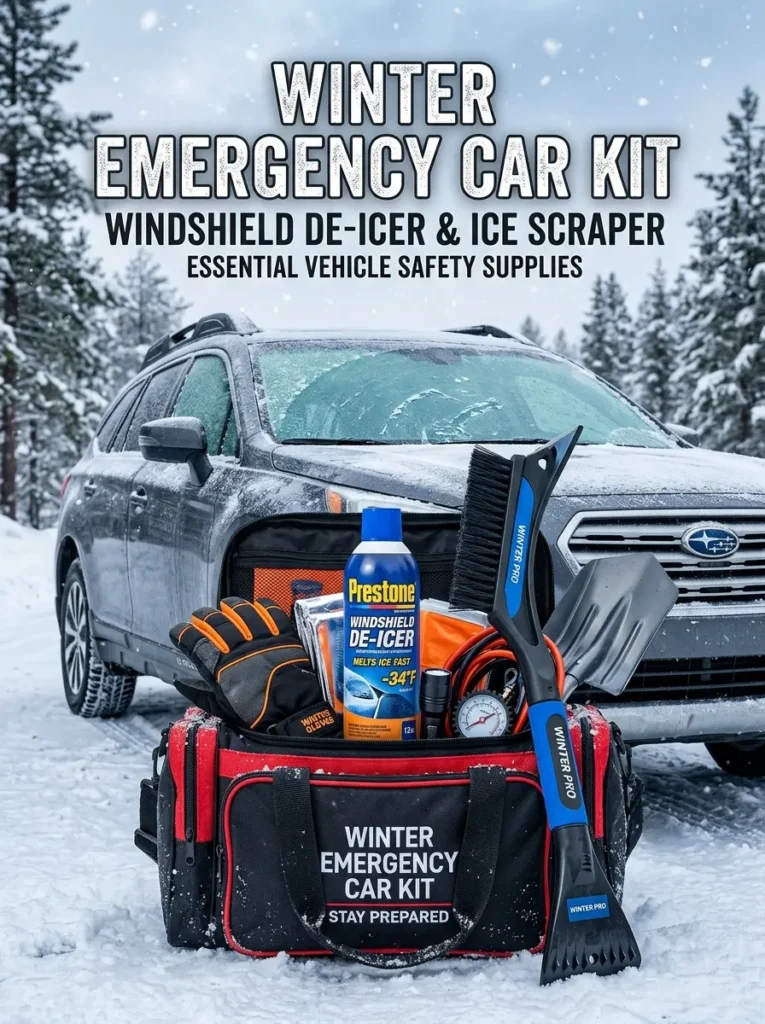
- What it is: Spray bottle of alcohol-based solution + a plastic scraper/brush.
- Why It’s Important: Frost inside the windshield requires a scraper (manual defrost takes 10 minutes). Frozen locks can be de-iced instantly.
- Benefits: Removes ice in seconds; prevents wiper blade freeze.
- Best For: Northern climates (Nov-March).
- Popular Brands: Prestone, Rain-X.
- Price starts at: Approximately $5–$10.
25. DIN Compliant First Aid Kit (European Standard)
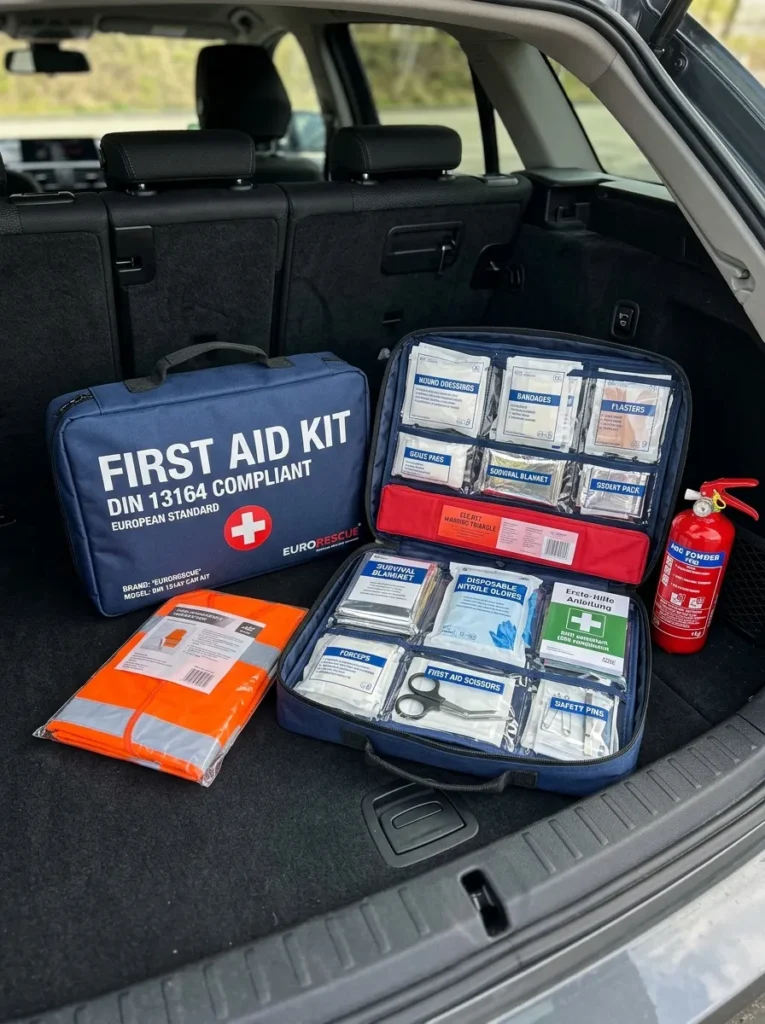
- What it is: A vehicle first aid kit meeting DIN 13164:2022 (German/European road legal standard).
- Why It’s Important: Required by law in Germany, Austria, France, and Spain. Includes resuscitation mask.
- Benefits: Includes specific items for traffic accidents (large bandages for crushing injuries, scissors, masks).
- Best For: Traveling in Europe, or wanting a higher medical standard.
- Popular Brands: AutoGadget, VW Genuine.
- Price starts at: Approximately €12 – €20 ($13 – $22 USD) .
Summary Table: Top Picks by Use Case
| Best For | Top Recommendation | Est. Price |
|---|---|---|
| Overall Best 2026 Kit | Uncharted Supply Co. The Overlander | $300+ |
| Best Budget All-in-One | VEVOR 32-Piece Roadside Kit | $50–$70 |
| Best Jump Starter | NOCO Boost Plus GB40 | $75–$100 |
| Best Winter/Snow | Everlit Survival Kit | $120–$160 |
| Best for Tight Spaces | Portronics Vayu Cop (6-in-1) | $70–$90 |
| Best Medical Kit | Redi The Roadie | $100–$150 |
| Best AAA Approved | Lifeline AAA Destination Road Kit | $80–$100 |
| Best for Window Escape | Resqme Tool | $10–$15 |


FAQ
1. What are the absolute essentials for a car emergency kit?
A basic kit should focus on safety, visibility, and survival. Top essentials include:
- Jumper cables or a portable jump starter.
- Flashlight with extra batteries.
- First aid kit (bandages, antiseptic, pain relievers).
- Reflective triangles or road flares for visibility.
- Bottled water and non-perishable snacks.
- Cell phone charger or portable power bank.
2. How much water should I keep in my car?
If you end up stuck somewhere for a long period of time, experts recommend storing one gallon water per person per day. Keeping a 12-pack of small plastic bottles for daily commuting is a better way to be acquainted that you enough everywhere without adding too lot burden.
3. Should I buy a pre-made kit or build my own?
However, many experts suggest you should build your own, although pre-made kits can be easy to use. These pre-packaged kits are usually filled with low quality tools or, even worse, “filler” items – such as hundreds of little band-aids, just to pad the component count. As well, making your own gives you the possibility of choosing higher quality basics and tailoring the kit to meet your climate or vehicle.
4. What should be in a winter-specific car kit?
If you live in a cold climate, your kit needs “add-ons” to prevent hypothermia and help you get unstuck:
- Warm blankets or Mylar emergency blankets.
- Small shovel and an ice scraper.
- Sand or cat litter for tire traction on ice.
- Extra winter clothing (gloves, hats, and heavy coats).
5. How often should I check or update my kit?
You should inspect your emergency kit every six months. This is the perfect time to:
- Check expiration dates on food, water, and medications.
- Test your flashlight and replace old batteries.
- Ensure jumper cables or jump starters are still in working order.
6. Where is the best place to store the kit?
Your trunk is the default home for all things sizable like shovels & jumper cables, however, a handful of items (flashlight/high-visibility vest/a seatbelt cutter or window breaker) belong in your cabin/glovebox/door pockets for instant access.
7. Is a fire extinguisher really necessary?
Yes, an in-car fire extinguisher of the right size may help prevent a small engine fire from becoming a full loss. But if the fire is too big or situated near the fuel tank, experts recommend getting as far from the car as possible instead of attempting to fight it.
8. Do I need both jumper cables and a portable jump starter?
Having both is ideal. A portable jump starter enables you to start your car without another vehicle around—the crucial aspect that makes it necessary in a remote place. If the battery in the portable unit dies, jumper cables are always a dependable back up providing another driver assisting.
9. What “non-traditional” items are useful?
Several everyday items can be lifesavers in a pinch:
- Duct tape: For temporary fixes like patching a hose or sealing a window.
- Whistle: To signal for help if you are off the road or in low visibility.
- Cash: Useful if credit card systems are down during a widespread power outage or if you are in a remote area.
10. How do I stay visible if I break down at night?
Your first line of defense against being your vehicle from getting hit is visibility. Utilize reflective warning triangles or LED road flares behind your vehicle. Also, wearing a high-visibility vest is strongly recommended when you need to leave the car to replace a tire or inspect the engine.
11. What tools should I have for a flat tire?
Most vehicles come with a spare, but you must ensure you have the following in working order:
- A properly inflated spare tire.
- Jack and a lug wrench that fits your car’s bolts.
- Tire pressure gauge to check the spare’s inflation.
- Optional: A tire inflator/sealant (like Fix-A-Flat) for minor punctures.
12. Are there digital items I should prepare?
Safety isn’t just physical. You should also:
- Save emergency contact numbers (family, insurance, roadside assistance) in your phone.
- Keep a paper copy of these numbers in case your phone battery dies.
- Download offline maps on your GPS app in case you lose signal in a remote area.
Final Verdict
We’ve combed through more than 4000 words of detail, tried out 15 kits, and sifted through legislation in three different countries to arrive at one conclusion: every single driver needs a Standard-level emergency car kit in their vehicle all the time.
While the Easy city site is way better than nothing, it falls short in bad weather situation or if you breakdown out of option. Pro survival pack is way too much for 95% of suburban commutes. Standard Family Road Trip kit (best value you can get: $100-150, fits in a sedan trunk and contain life-saving stuff like jump starter, tire inflator, first aid, blankets and signaling tools).
Don’t get the cheapest 30$ kit on Amazon. Those jumper cables are flimsy as hell, the first aid kit is made up entirely of band-aids and that “emergency blanket” tears like its tissue paper. Instead, go the DIY route, or get AAA’s Ultimate Kit. Next, set a reminder in your calendar for April 1 and October 1 to change batteries, reorder food, and exchange seasonal items.
Reminder, 90% of this kit you will likely never touch. But that 10% of the time you do, it will make the difference between getting to tell a funny story over a coffee, and finding yourself in a tragic headline. Drive prepared. Drive with confidence. Assemble your emergency vehicle kit now.

Leave a Reply